
Intrepid Travels, Travel Tips

Sidi Ifni Travel Guide

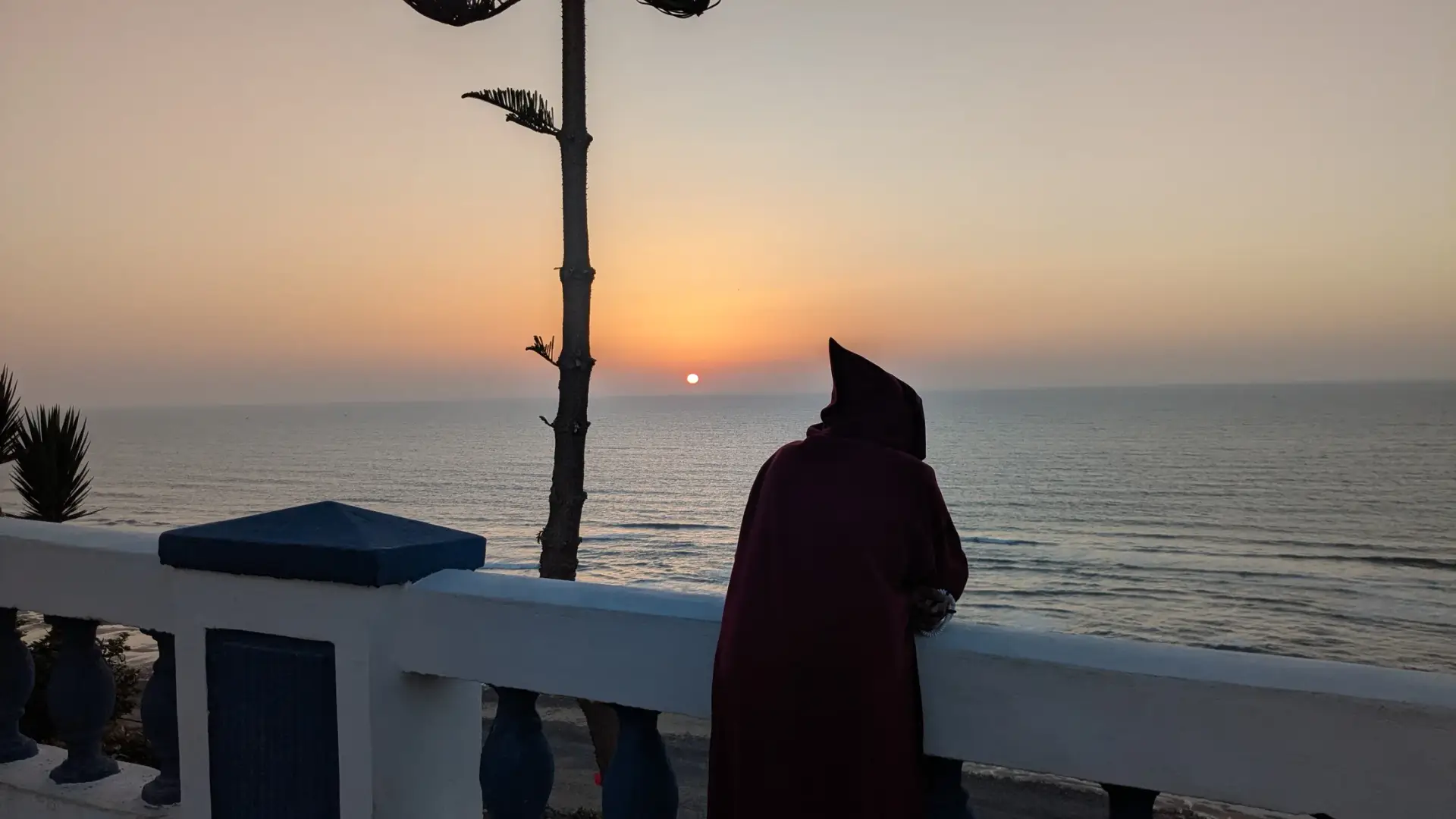
Person in traditional clothing watching the Atlantic sunset from the Sidi Ifni corniche

Sidi Ifni Travel Guide: Spanish History, Beaches, Markets and Practical Tips

We spent two weeks in Sidi Ifni at the end of July and beginning of August, which gave us much longer than most visitors have to explore the town properly.  I am always on the look out for new products for Terrapin Trading. Morocco is one of the best countries for crafts in the world.  See the over 100 Moroccan Items we sell. 

Sidi Ifni is one of the most unusual places we visited in Morocco. It is a quiet Atlantic coastal town with a surprisingly large amount of Spanish history, distinctive Art Deco and modernist buildings, a huge weekly market and some excellent beaches within driving distance.

It is also much less touristy than places such as Marrakech, Agadir or Essaouira. Even in the middle of summer, there were very few foreign visitors. The town felt safe, friendly and relaxed, and most places could easily be reached on foot.

It is not perfect. The main town beach was quite littered during our stay and would not be my first choice for swimming. The town is also built on a steep slope, so walking between the beach and the centre involves a fair climb. However, the lack of crowds, the friendly atmosphere and the amount of visible history made Sidi Ifni one of the most interesting stops on our trip.

This guide is based on our own stay in Sidi Ifni. Travel and personally sourcing products overseas have been part of the Terrapin Trading story since the business began.

Sidi Ifni at a glance

  • How long to stay: Three or four days would be enough for most visitors, although we stayed for two weeks.
  • Best for: History, architecture, beaches, surfing, photography, families, backpackers and slower travel.
  • Car needed: Not for the town itself, but very useful for nearby beaches and day trips.
  • Best nearby beach: Sidi Oulezeg, around 20 minutes south by car.
  • Main market day: Sunday, on the former Spanish airfield.
  • Cash: Still essential for most smaller shops, cafés and market stalls.
  • Parking: Easy and free in most of the town.
  • Languages: Arabic and French are most useful, although we also encountered more English and Spanish than expected.
  • Afternoon closures: Many businesses appear to follow a Spanish-style siesta and close or become very quiet from roughly 4 pm until 6 pm.

Is Sidi Ifni worth visiting?

Yes, especially if you are interested in history or want somewhere quieter than Morocco’s better-known coastal destinations.

Sidi Ifni does not have the polished tourist infrastructure of Agadir or Essaouira, but that is also a large part of its appeal. It feels like a real working Moroccan town rather than somewhere built mainly around visitors.

The centre is small enough to explore on foot, and the surviving Spanish buildings give it a character unlike anywhere else we visited in Morocco. Former government offices, a church, a cinema, military buildings, an airfield and the remains of an old cableway are still visible around the town.

The atmosphere was relaxed throughout our stay. Local people were friendly, parking was easy and we felt safe walking around both during the day and in the evening.

I would say Sidi Ifni is particularly suited to people who enjoy history, architecture, photography, surfing, markets and slow travel. It is probably less suitable for anyone looking for nightlife, luxury resorts or a perfectly maintained beach directly outside their accommodation.

A short history of Sidi Ifni

Sidi Ifni has a much more complicated history than its quiet atmosphere suggests.

Spain’s claim to territory on this part of the Atlantic coast dated back to the Treaty of Tetouan in 1860. The treaty followed the Hispano-Moroccan War and referred to land connected with an earlier Spanish coastal outpost known as Santa Cruz de Mar Pequeña.

The location of that earlier outpost was disputed, and Spain did not actually occupy Sidi Ifni until 1934, more than 70 years later.

Spanish forces entered Ifni in April 1934 and established Sidi Ifni as the capital of the territory. The town we see today was largely planned and constructed after that occupation.

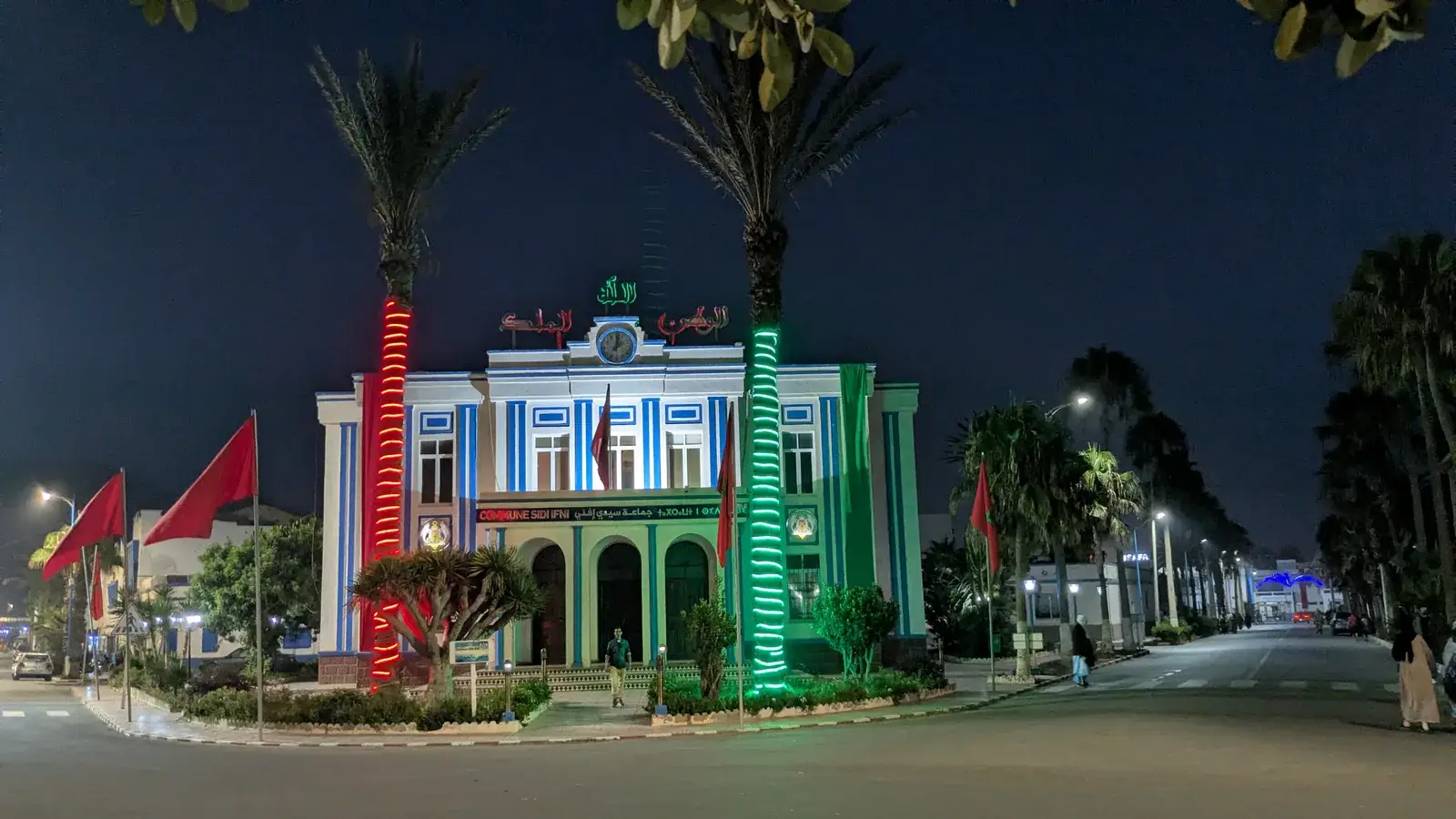
Illuminated Sidi Ifni Town Hall at night

Building a Spanish town

Sidi Ifni was not developed like a traditional Moroccan medina. The Spanish created a planned administrative town above the Atlantic, with wide streets, formal squares and separate civic, military and residential areas.

The new town included a governor’s palace, government offices, a church, cinemas, schools, a hospital, military barracks, a prison, an airfield, a lighthouse and facilities for loading ships offshore.

Many of these buildings still survive, although almost all of them now have different uses.

The architecture is one of the main reasons Sidi Ifni is worth visiting. Some buildings are formal and monumental, while others have curved façades, rounded corners, balconies and horizontal windows associated with Art Deco and modernist architecture.

Several buildings also have a deliberately nautical appearance, with terraces and curves designed to resemble ships. El Barco, beside Café Ocean Miramar, is perhaps the clearest example.

Former Spanish Governors Palace
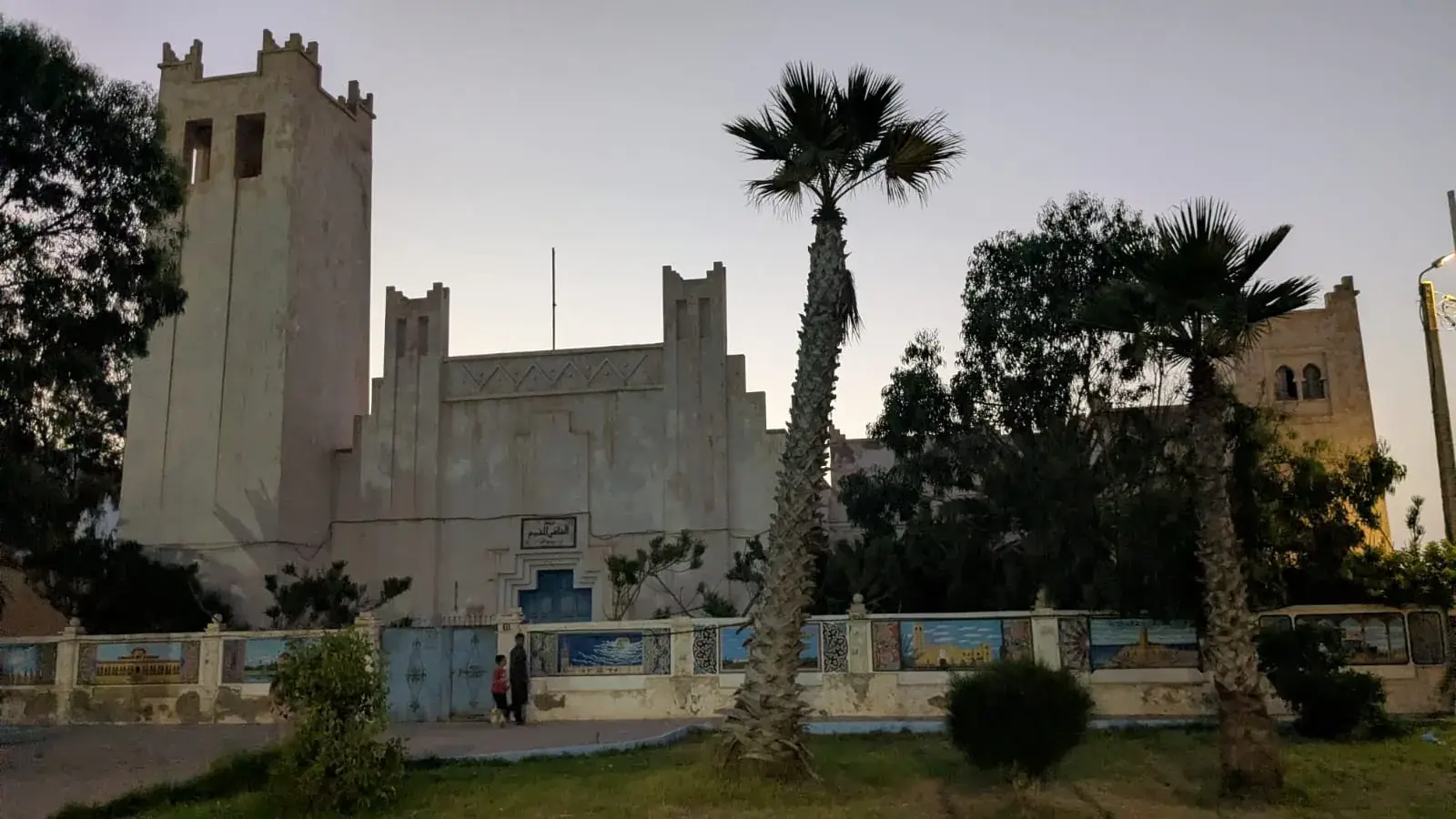
Evening street scene between the former Spanish consulate and former church in Sidi Ifni

The former Governor’s Palace
One of the most prominent surviving buildings from the Spanish period.

The former Spanish church (right)
The former Church of Santa Cruz is now used as a courthouse.

Spanish West Africa

From 1946, Ifni was administered together with the Spanish Sahara as part of Spanish West Africa.

Sidi Ifni became the administrative and military centre of the enclave. Spain continued to invest in the town, but Ifni remained geographically isolated and difficult to supply.

The coastline did not have a suitable natural deep-water harbour. Ships therefore remained offshore while cargo was moved using an unusual cableway and loading system.

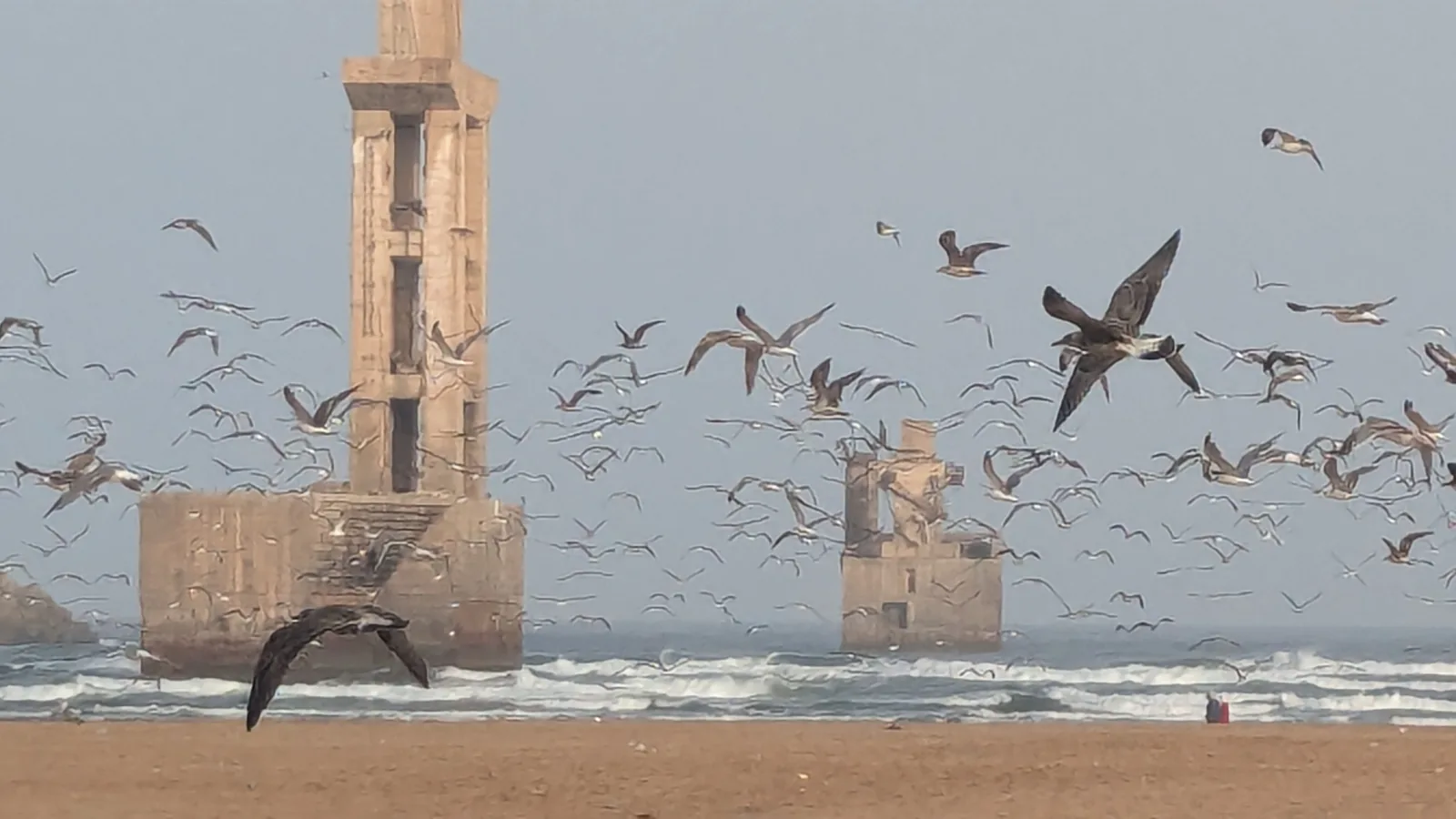
The remains of that system can still be seen from the corniche and beside the modern harbour. Large concrete supports stand in the sea next to the breakwater, while other towers and structures survive on land.

The town’s airfield was also important because connections by road and sea were difficult. The runway is no longer used by aircraft, but its outline can still be seen clearly on satellite images. Today, the large Sunday market takes place across part of the former airfield.

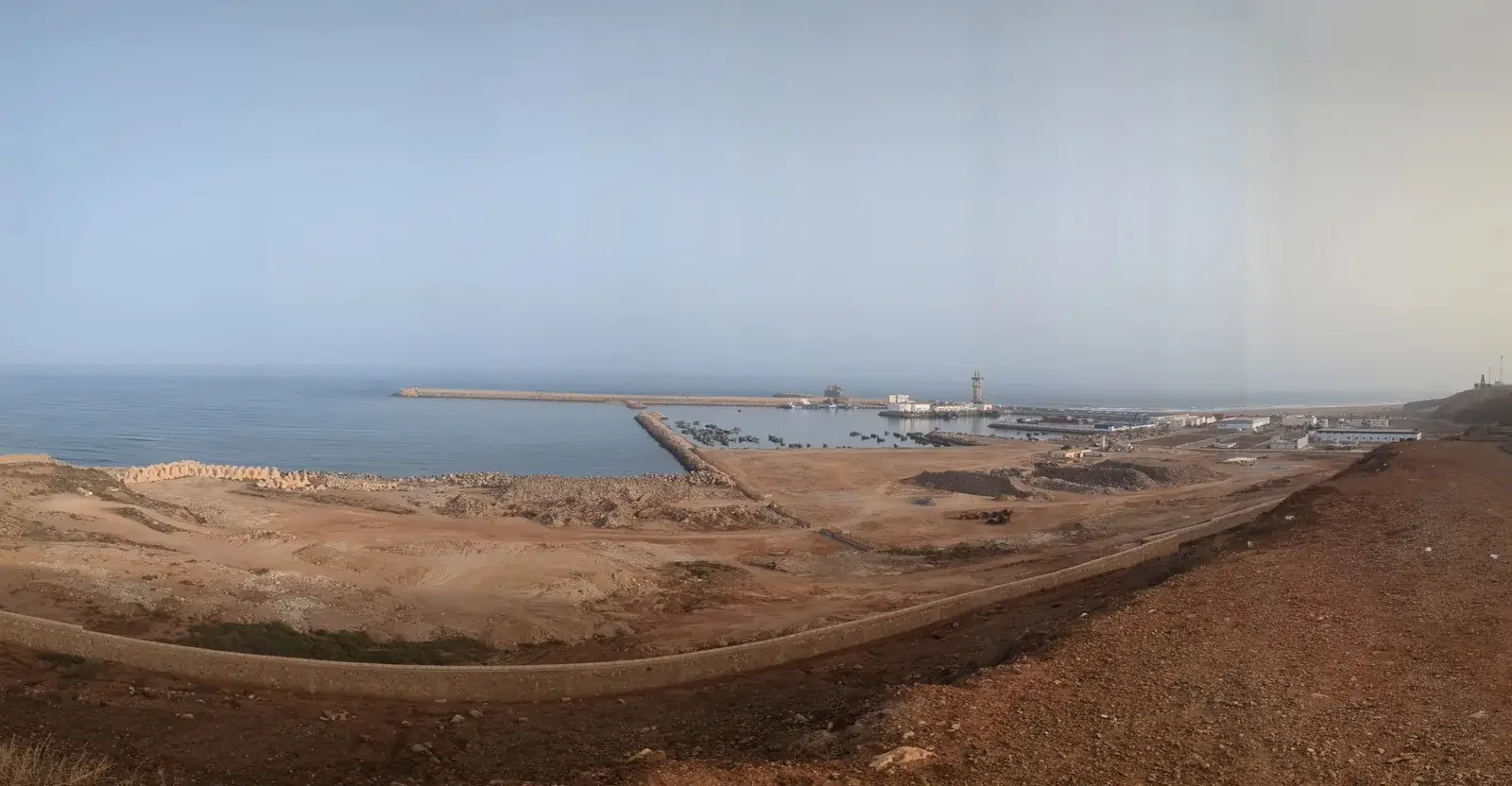
Panoramic view of Sidi Ifni harbour, breakwater and Atlantic coastline
Surviving concrete towers from the former Spanish cableway at Sidi Ifni harbour

The modern harbour and surviving remains of the Spanish cableway system.

Some of the surviving cableway structures near Sidi Ifni.

Moroccan independence and resistance

Morocco became independent from France and most of the former Spanish Protectorate in 1956, but Spain retained control of Ifni and the Spanish Sahara.

For Morocco, Ifni remained territory that should be recovered. Resistance increased among the local Aït Baamrane population, and the Moroccan Liberation Army began attacking Spanish positions across the territory.

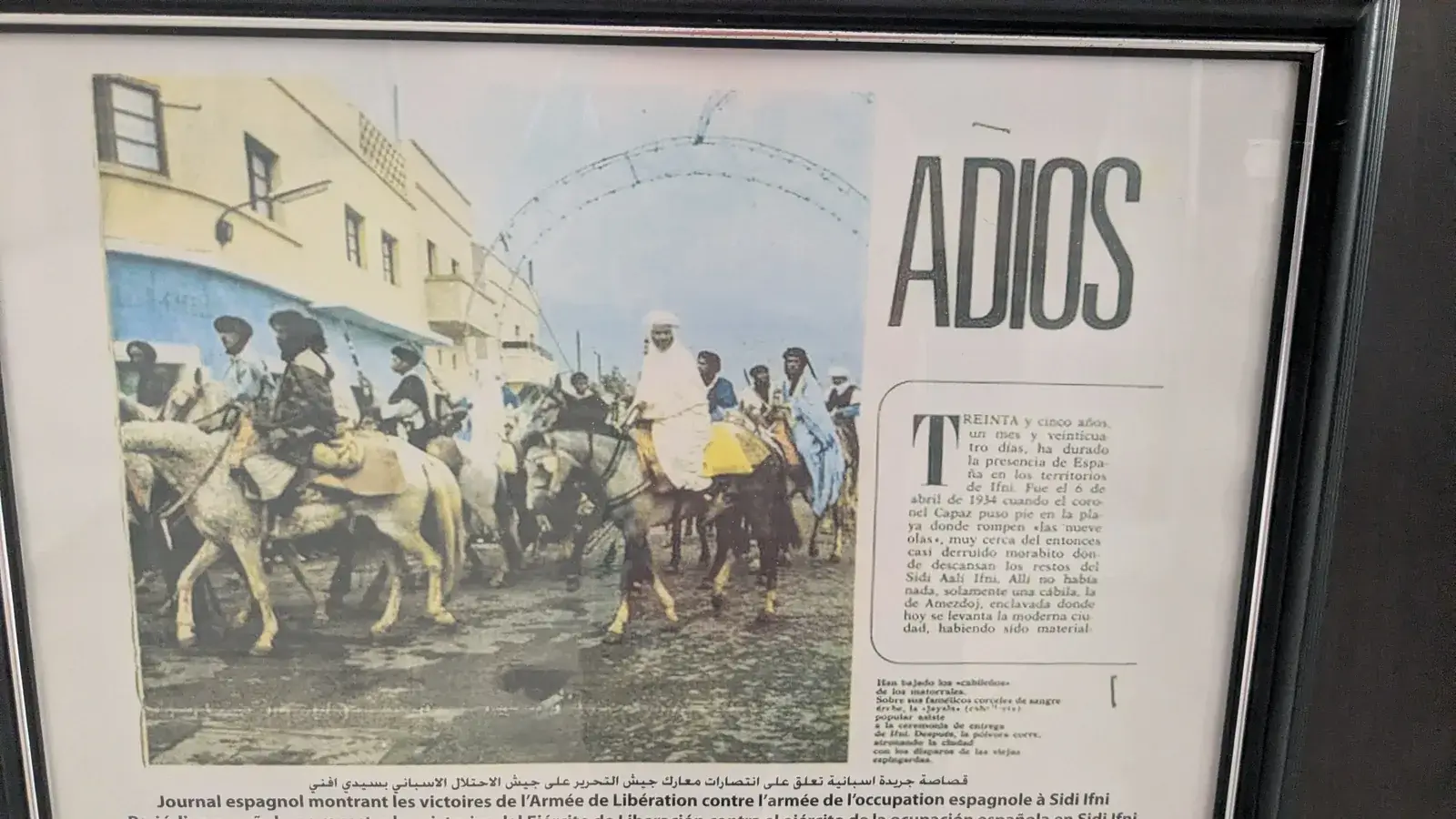
The museum in Sidi Ifni presents this period mainly from the Moroccan and Aït Baamrane perspective. Its displays include photographs of resistance fighters, local women involved in the struggle and members of the Liberation Army.

Historical exhibit inside the Musée Mémoire de la Guerre d’Ifni in Sidi Ifni

An exhibit inside the Musée Mémoire de la Guerre d’Ifni.


The Ifni War

Fighting broke out in November 1957.

The Moroccan Liberation Army attacked Spanish positions across Ifni and attempted to isolate Sidi Ifni. Spanish forces withdrew from several smaller inland posts and concentrated their defence around the town.

Sidi Ifni itself was not captured. Spain reinforced and supplied the town by air and sea, while fighting continued across Ifni and the neighbouring Sahara into 1958.

Although Spain continued to claim the whole territory after the war, its effective control was largely reduced to Sidi Ifni and the defended area immediately surrounding it.

The conflict is sometimes referred to as Spain’s forgotten war because it received relatively little attention at the time and was overshadowed by the wider process of decolonisation across Africa.

Return to Morocco

In 1958, Spain reorganised Ifni as a Spanish province rather than formally treating it as a colony.

This did not end Morocco’s claim to the territory. Ifni was expensive to maintain, increasingly difficult for Spain to justify internationally and remained politically disputed.

Spain and Morocco signed an agreement in January 1969 for the return of Ifni.

Spanish rule ended on 30 June 1969, after 35 years of effective occupation.

Spain continued to control the neighbouring Spanish Sahara until the upheavals of 1975 and 1976. This explains why some photographs and objects connected with Spanish colonial history date from after the handover of Ifni itself.

Sidi Ifni today

The remarkable thing about Sidi Ifni is how much of the Spanish town still survives.

The former church is now a courthouse. The Governor’s Palace, Town Hall and old administrative buildings remain prominent. The former consulate is boarded up, the old airfield hosts the Sunday market and several military and civic buildings are still used by Moroccan institutions.

The lighthouse is now associated with a restaurant, while the remains of the cableway stand beside a much newer working harbour.

Sidi Ifni is therefore not a preserved colonial museum. It is a living Moroccan town that has continued to use and adapt buildings created during the Spanish period.

That is what makes walking around it so interesting. The history is visible in ordinary places: market stalls spread across a former runway, government offices inside colonial buildings and concrete loading structures still standing in the Atlantic.

Historic buildings to find in Sidi Ifni

One of the best things to do in Sidi Ifni is simply walk around the town and look for the surviving Spanish buildings.

Most are not museums and several are still in everyday use, so this is mainly an exterior walking route rather than a tour where you go inside each building.

The centre is compact enough to explore on foot, although the steep streets between the beach, lower town and corniche can make the route more tiring than it looks on a map.

Plaza de España

The former Plaza de España is now known as Place Hassan II and remains one of the main focal points of the town.

Several important Spanish-period buildings stand around or close to the square, including the Town Hall, the former Governor’s Palace and the former church.

It is a good place to begin a walking tour because the main historic buildings are close together and the square is especially attractive in the evening when the buildings are lit.

Town Hall

The Town Hall is one of the most striking surviving buildings from the Spanish period.

Its curved frontage, horizontal lines and illuminated façade make it particularly photogenic after dark.

The building is still in official use, which is a good example of how Sidi Ifni has adapted its colonial architecture rather than preserving it as a museum piece.

The former Governor’s Palace is another of the major buildings around the old administrative centre.

During Spanish rule it was associated with the government of the territory. The building remains prominent today, although visitors should treat it as a working official site rather than a tourist attraction.

It is best viewed from the surrounding streets and square.

Former Church of Santa Cruz

Former Spanish Church of Santa Cruz, now a courthouse in Sidi Ifni, photographed in the evening

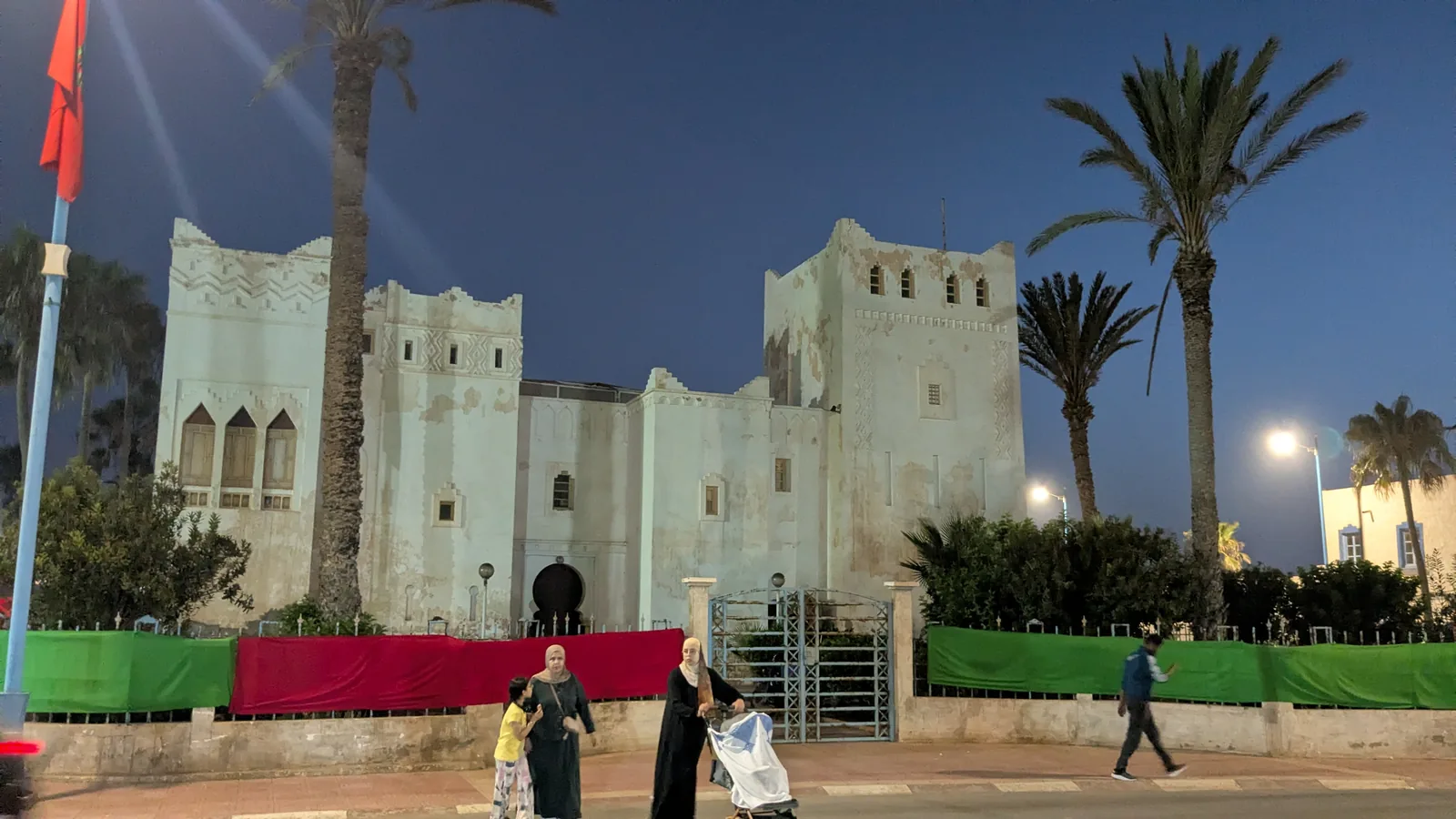
The former Spanish Church of Santa Cruz is now used as a courthouse.

This was one of the most striking Spanish-period buildings we found in Sidi Ifni. Its tall square towers and decorative façade make it look quite different from an ordinary modern government building.

The conversion from church to courthouse is also one of the clearest examples of how Sidi Ifni has reused its Spanish buildings rather than preserving the town as a historic museum.

The building is particularly atmospheric towards sunset, when the towers are silhouetted against the sky and the surrounding gardens become quieter.

Former Spanish Consulate

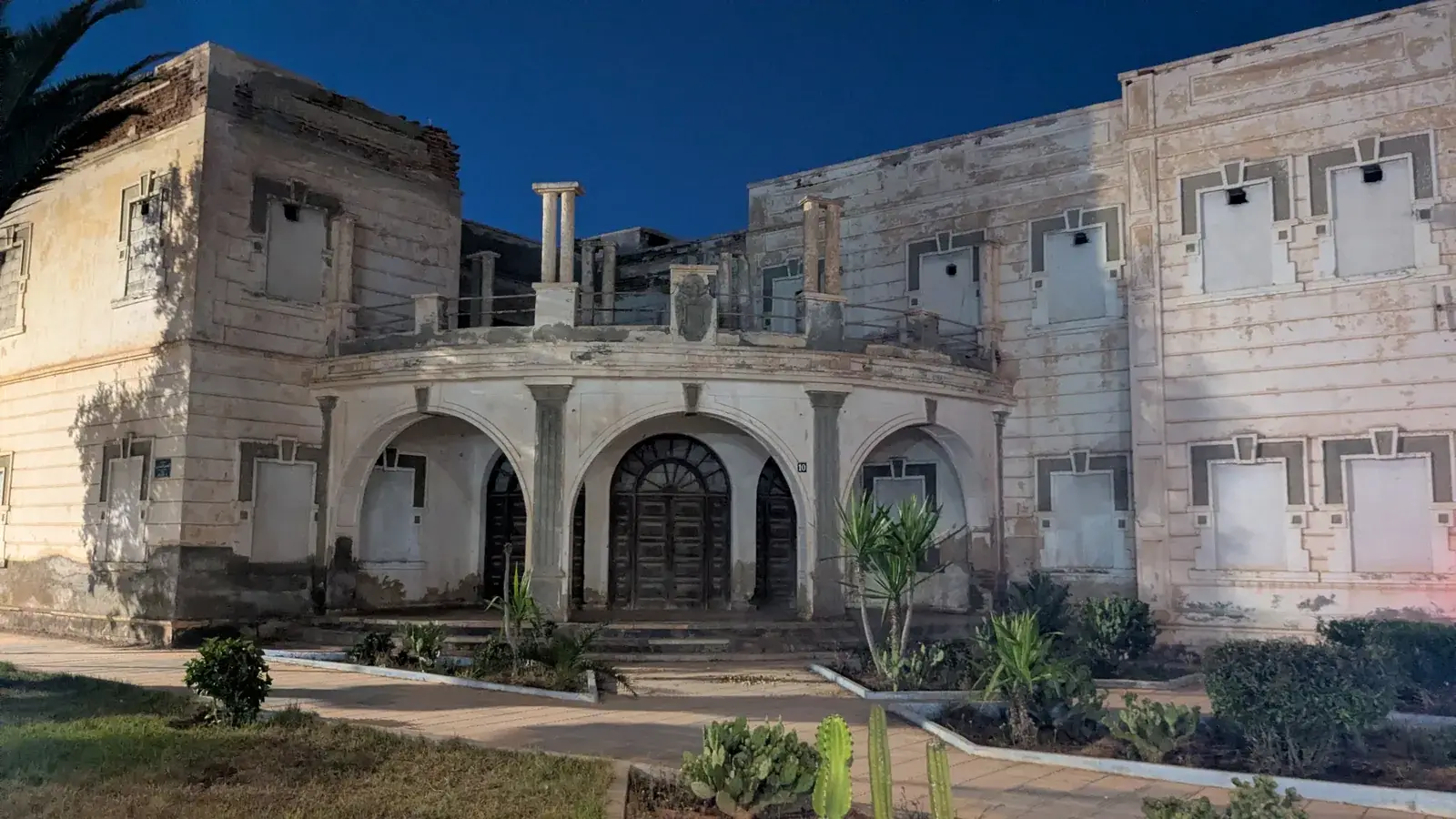
Boarded former Spanish consulate building in Sidi Ifni

The former Spanish consulate is one of the more atmospheric buildings in Sidi Ifni, although it is now boarded up and in poor condition.

Its arcaded frontage and prominent position make it easy to imagine how important it once was during the Spanish period.

The building is not open to visitors, so this is another exterior stop only. Even in its present condition, it is one of the most interesting surviving buildings in the town.

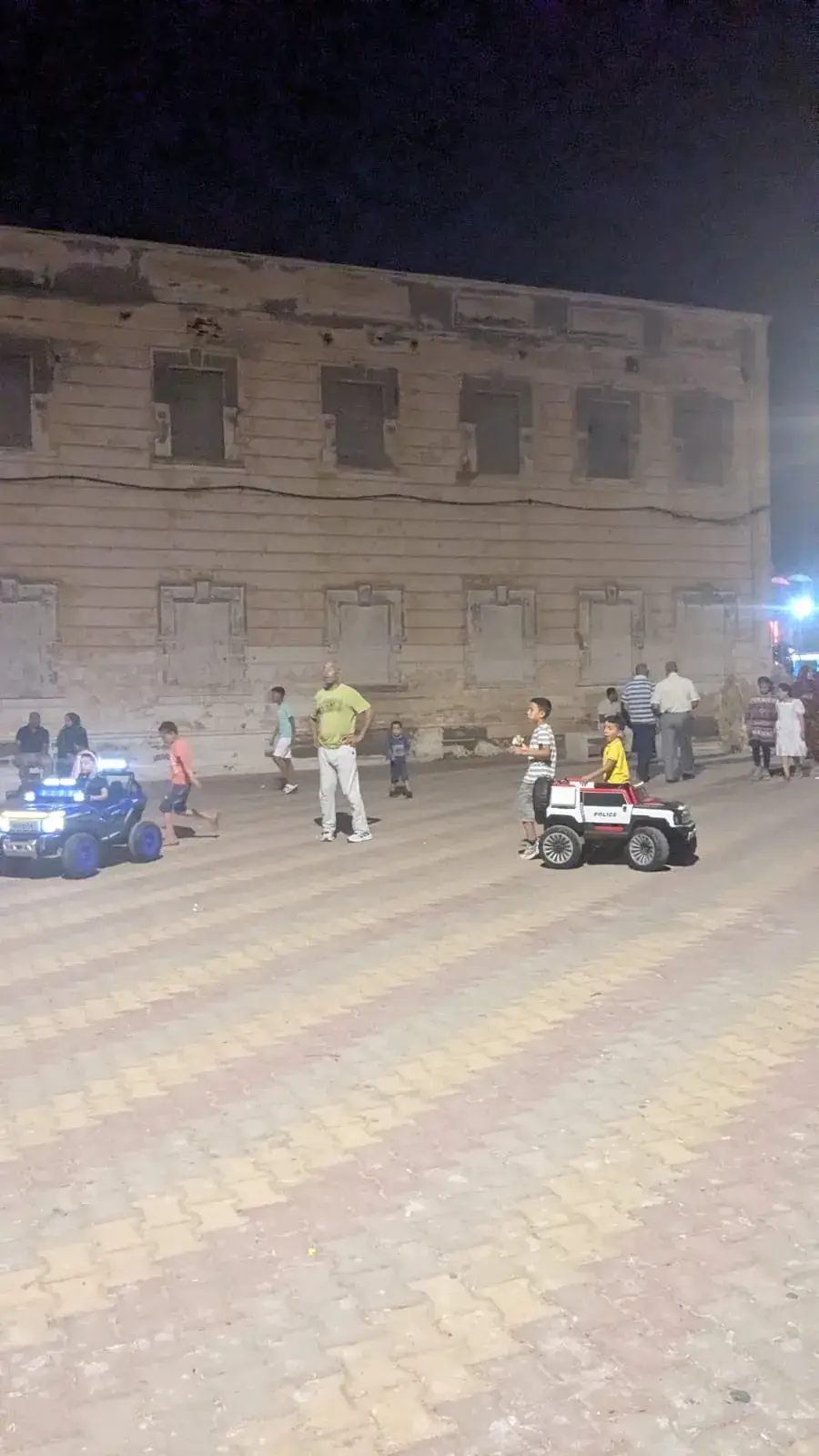
Children’s electric cars near the consulate

Children riding electric toy cars in the square behind the former Spanish consulate in Sidi Ifni at night

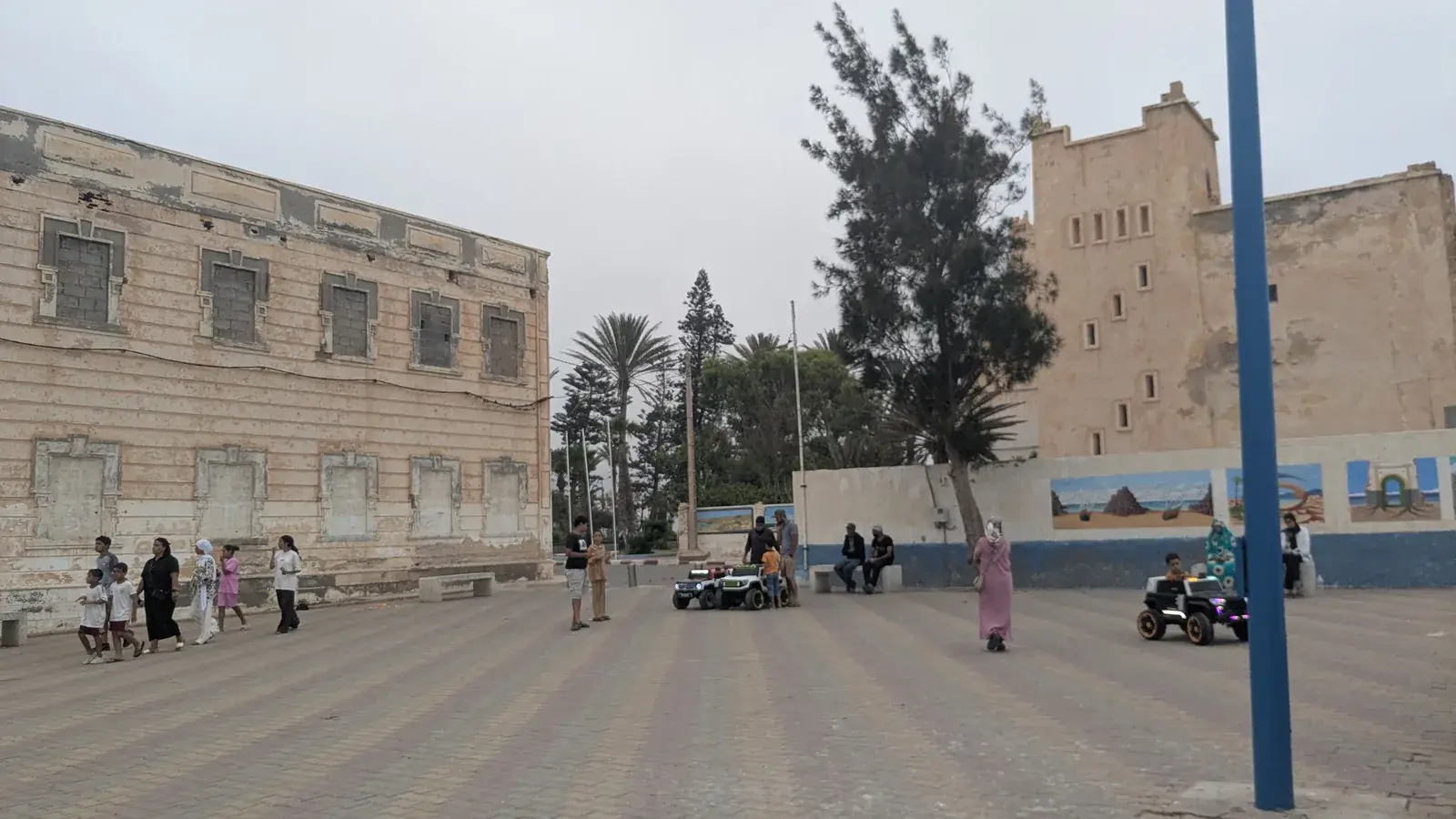
The square behind the former consulate becomes much livelier in the evening.

When we visited, children could ride small battery-powered cars around the paved area. It cost around 10 DH for roughly ten minutes and seemed mainly aimed at younger children.

It is a slightly surreal scene: children driving brightly lit toy police cars in front of a large, decaying Spanish-period building.

This is not a major attraction, but it is a good option for families and shows how the historic parts of Sidi Ifni are still used as ordinary public spaces.

El Barco

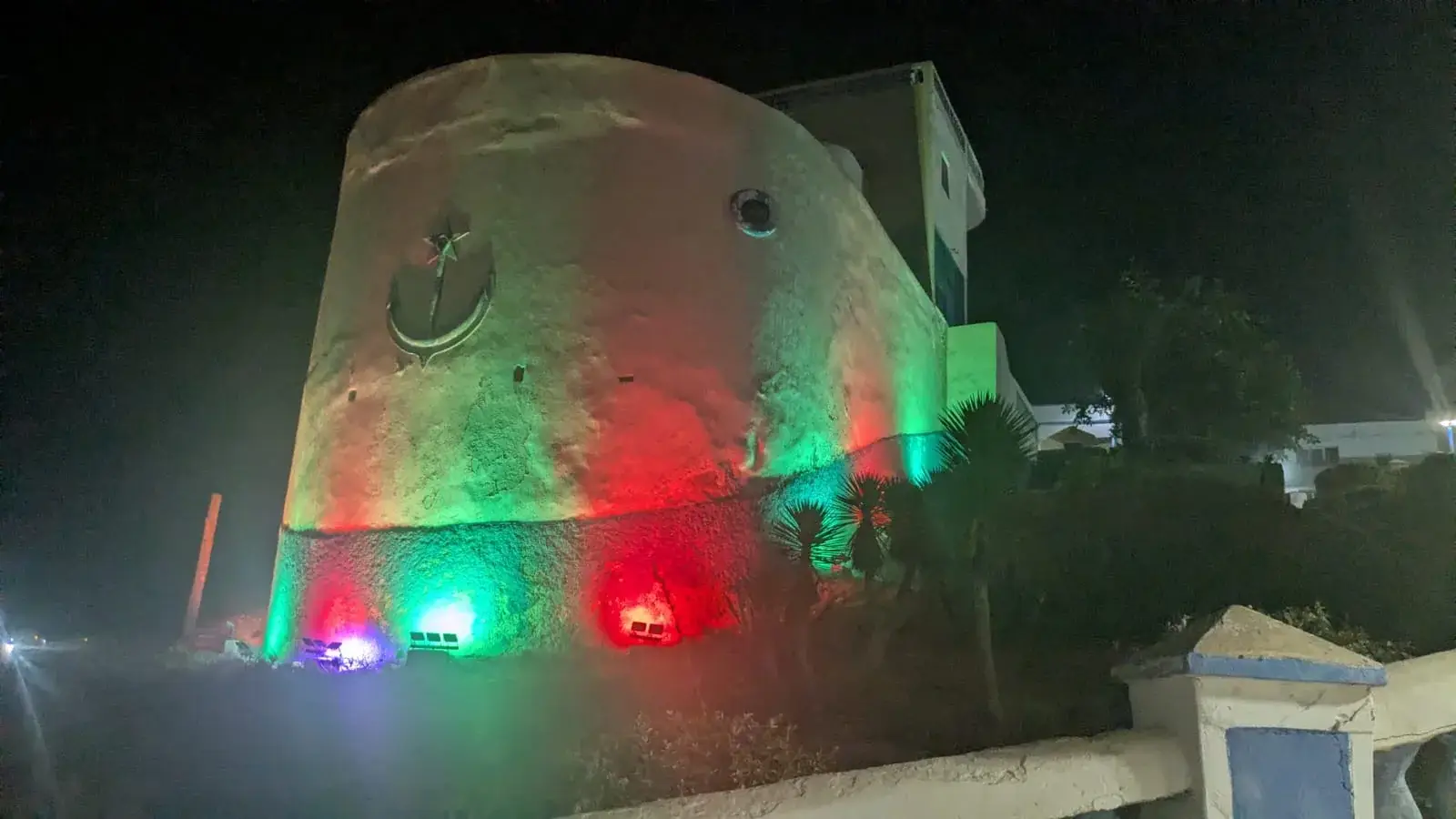
El Barco, the ship-shaped Spanish-period building in Sidi Ifni, illuminated at night

Beside Café Ocean Miramar, on the steps leading up towards the corniche, is the unusual ship-shaped building known as El Barco.

It was originally the Spanish Naval Secretariat — Secretaría Naval Española — and was used as administrative offices connected with the Spanish Navy during Spanish rule.

The building was deliberately designed to resemble the bow of a ship, but it was never an actual vessel or a naval base.

It should not be confused with the Comandancia de Marina, which was a separate maritime-command building and was later converted into the restaurant now known as El Faro.

El Barco itself was later used as housing.

The curved bow-like front, porthole-style opening, anchor decoration and deck-like upper levels make it one of the most distinctive surviving Spanish-period buildings in Sidi Ifni. It is particularly striking at night when the exterior is illuminated.

El Faro and the former Comandancia de Marina

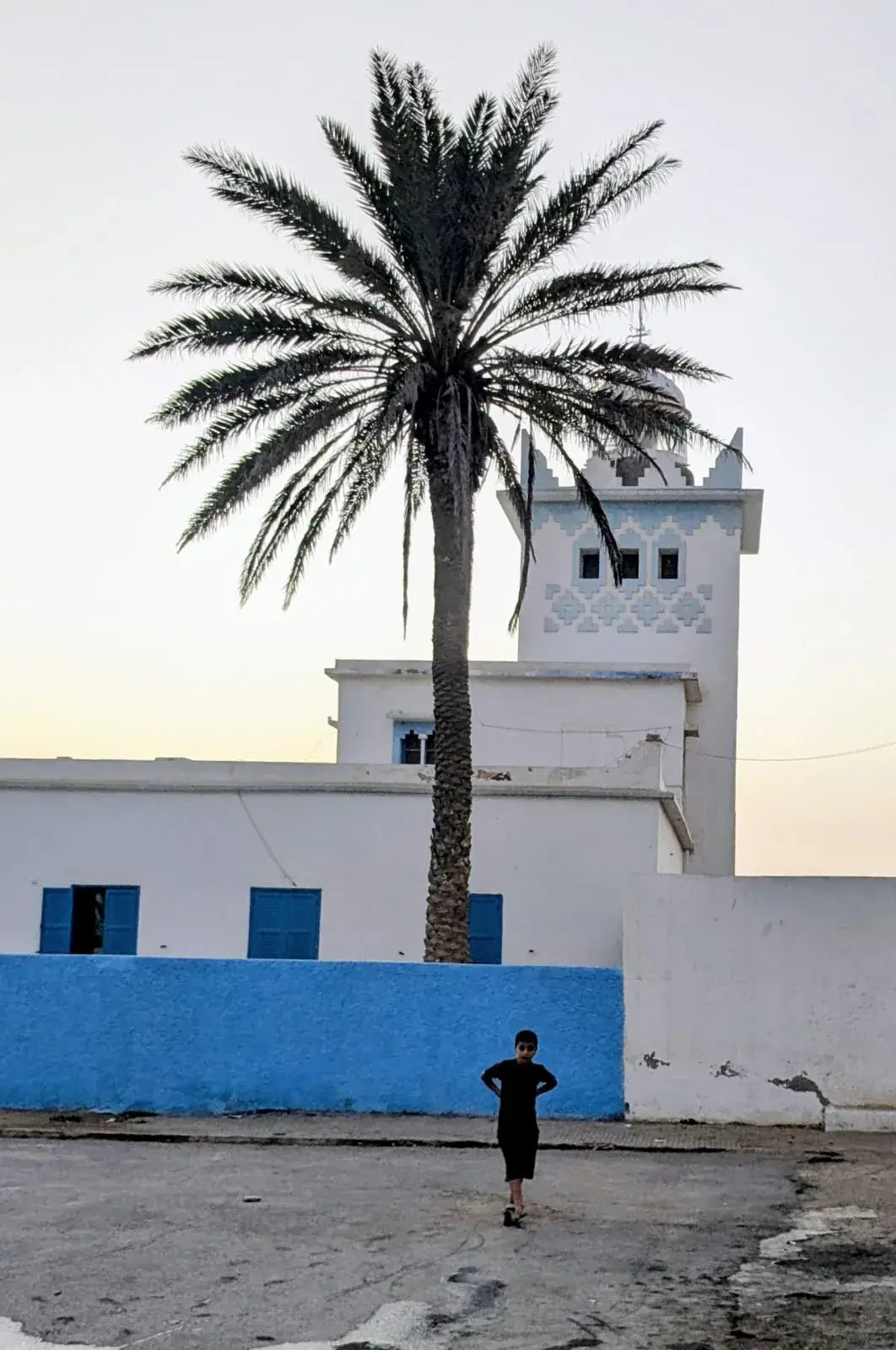
Spanish-period lighthouse in Sidi Ifni behind a palm tree at dusk

The Spanish-period lighthouse stands high above the beach and is one of the easiest landmarks to spot from around Sidi Ifni.

Nearby is the former Comandancia de Marina, the Spanish maritime-command building. This was later converted into the restaurant known as El Faro.

It is a separate building from El Barco. El Barco contained the Spanish Naval Secretariat, while the Comandancia de Marina served the maritime command.

The surrounding area gives excellent views over the Atlantic, Sidi Ifni Beach and the lower part of the town.

Cité Militaire

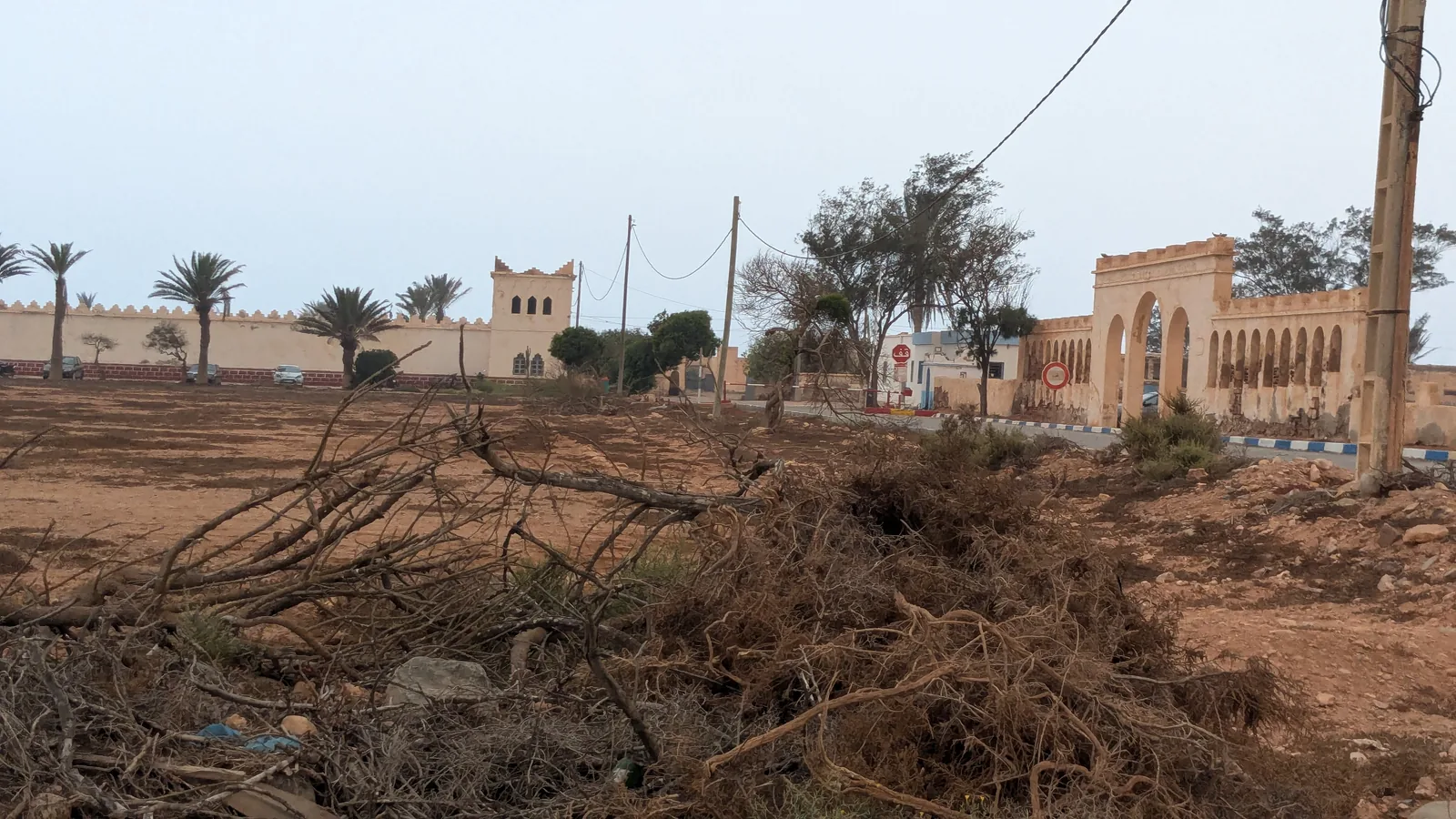
Distant exterior view towards the Cité Militaire area of Sidi Ifni

Cité Militaire formed part of the military area of Spanish Sidi Ifni.  Its sperated from the town by the river.

Some of the buildings and street layout remain visible, but this is still a sensitive area.

I was told off for taking a photograph nearby, so I strongly advise against photographing military buildings, entrances, guards or security arrangements.

It is fine to pass through the surrounding streets, but use common sense and keep the camera away.

Former airfield and Sunday market

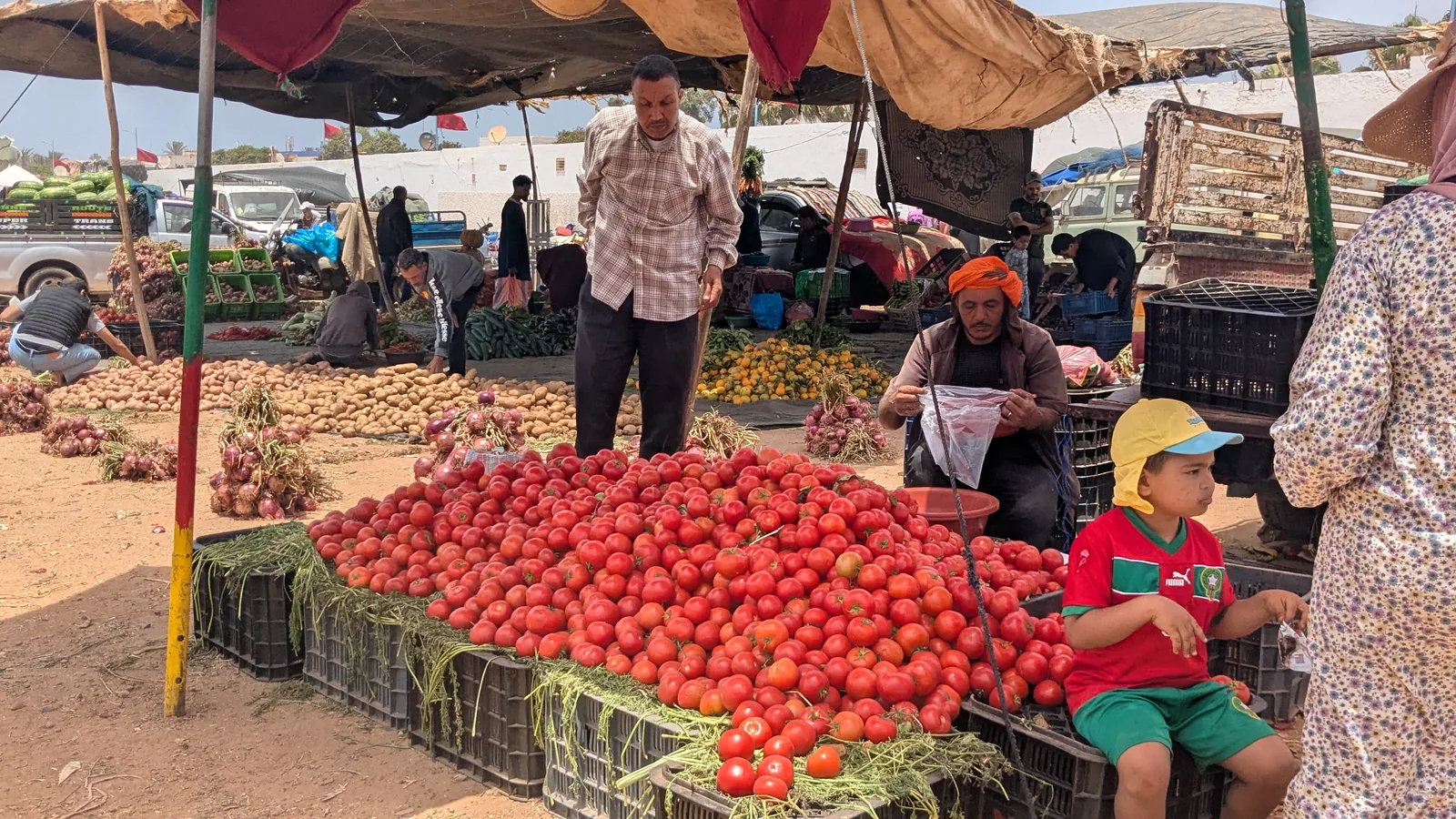
Fresh produce stalls at the Sunday market on Sidi Ifni’s former airfield

The large Sunday market takes place across part of the former Spanish airfield.

On the ground, the old runway is not always obvious, but its shape is much easier to understand when looking at satellite images.

The market is one of the busiest and most interesting places in Sidi Ifni. On Sunday the area fills with clothing, tools, food, jewellery, household goods and bric-a-brac.

It is an unusual example of part of the Spanish town being absorbed into everyday Moroccan life. The airfield has disappeared as a working airport, but the open space now hosts one of the town’s most important weekly events.

Harbour and Spanish cableway remains

Sidi Ifni’s modern harbour should not be confused with the Spanish offshore loading system.

Because the coast lacked a suitable natural deep-water harbour, ships remained offshore while goods were moved using a cableway and loading installation built during the Spanish period.

The modern port began operating much later, after the end of Spanish rule.

You cannot freely enter the working harbour, but there are good views from the corniche. The easiest surviving parts to photograph are the large concrete supports standing in the sea beside the breakwater.

A practical walking route: Start around the former Plaza de España and see the Town Hall, Governor’s Palace and former church. Continue towards the former consulate and cinema, then walk down towards Café Ocean Miramar and El Barco before climbing towards the corniche, lighthouse and harbour viewpoints.

This is a suggested route rather than a formal signed trail. Allow extra time for the steep streets, photographs and stops along the corniche.

Beaches in and around Sidi Ifni

Sidi Ifni is on a dramatic stretch of Atlantic coast, but the beaches vary quite a lot.

The main town beach is convenient and easy to reach on foot, but it was quite littered during our stay and would not be my first choice for swimming.

For a cleaner, quieter beach, Sidi Oulezeg was much better. We returned there several times and thought it was the best beach we visited in the area.

Sidi Ifni Beach

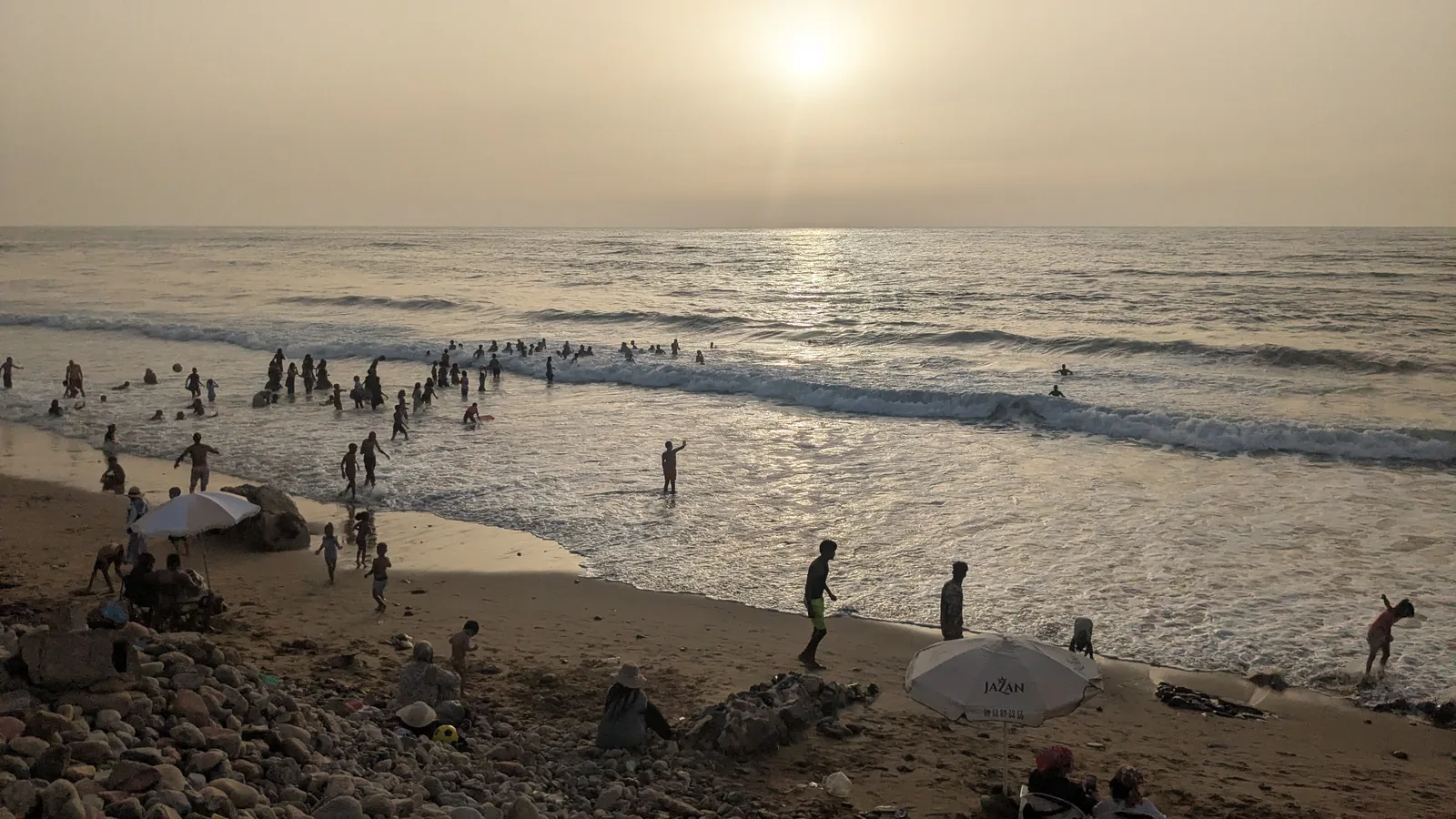
People swimming and walking on Sidi Ifni beach at sunset

Sidi Ifni Beach sits directly below the town and is easy to reach from the corniche.

It is useful for a walk, watching the sunset or spending a little time beside the sea, but it was noticeably littered during our stay. Because of that, I would not describe it as the best swimming beach in the area.

The beach is overlooked by the lighthouse and the upper town, which makes it visually impressive even when the sand itself is not especially clean.

There were lifeguards present, and they appeared to take their work seriously. They regularly used whistles and directed swimmers according to the waves and currents.

Sidi Oulezeg Beach

Sidi Oulezeg is around 20 minutes south of Sidi Ifni by car and was our favourite beach in the area.

It was cleaner, quieter and much better for swimming than the main town beach. There were still waves and currents, but the lifeguards were active and directed people towards the safest part of the water.

The beach is signposted from the main road. The final kilometre is rough and uneven, but we managed it slowly in a normal hire car without any problem.

Parking was free. A beach parasol cost 20 DH for the day, which was about £1.60, €1.90 or $2.10 at the time of our visit.

There are no proper facilities directly on the sand, so take water, food and anything else you need. Auberge Maison Diyani sits on the cliff above the beach and has a café and restaurant.

Sidi Ifni Beach or Sidi Oulezeg?

For convenience, sunset and an easy walk from town, Sidi Ifni Beach is fine.

For cleaner sand, fewer people and better swimming, I would choose Sidi Oulezeg every time.

The only real advantage of Sidi Ifni Beach is that it is directly below the town and has easier access to cafés, shops and accommodation.

Legzira Beach

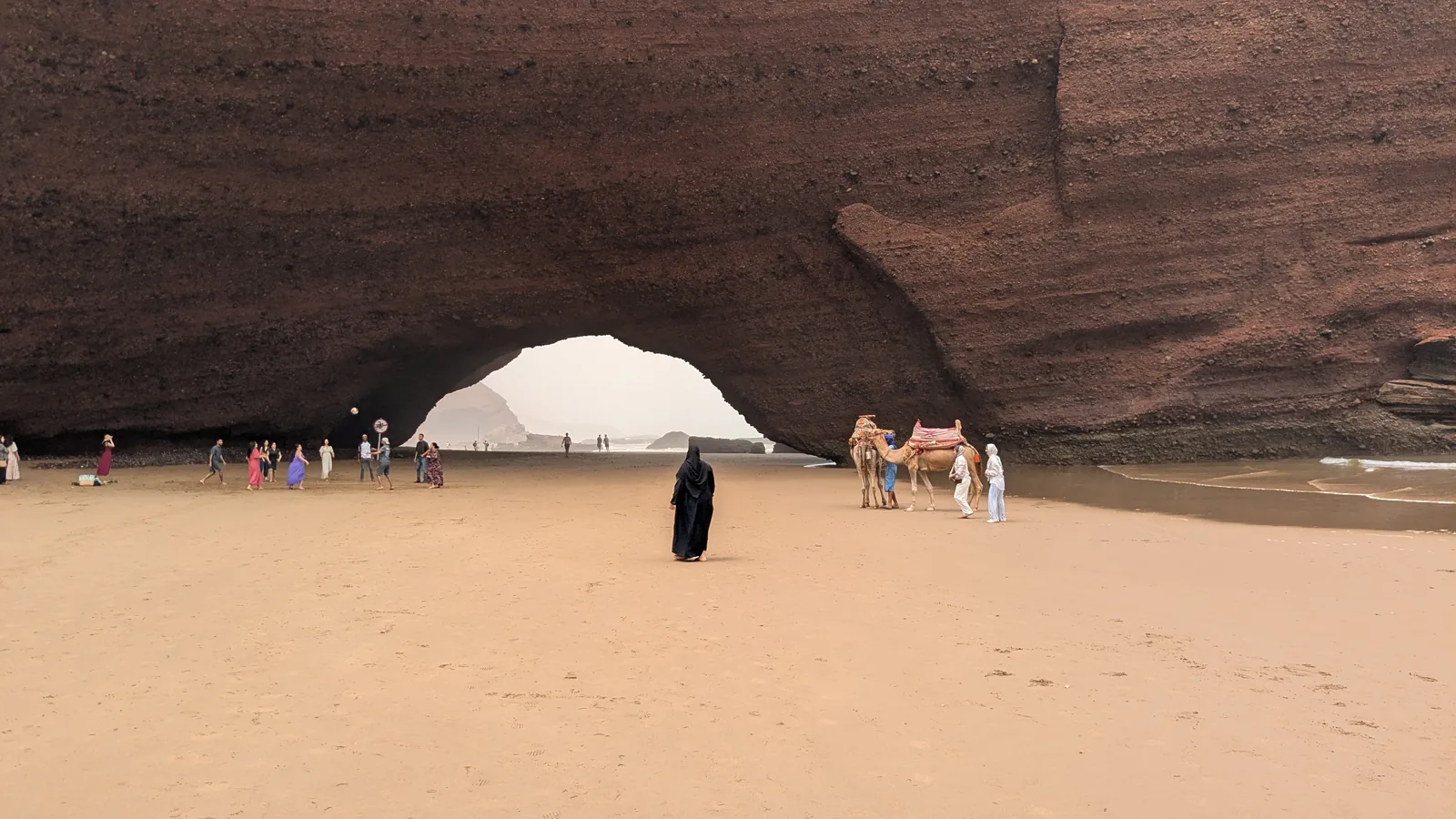
Large red-rock natural arch at Legzira beach near Sidi Ifni

Legzira is one of the best-known beaches on this part of the Moroccan coast and is famous for its natural rock arch.

We visited it while travelling from Mirleft towards Sidi Ifni rather than as a separate day trip.

The beach is visually impressive and worth stopping for, especially if you are already driving between Mirleft and Sidi Ifni. It is more dramatic than the main Sidi Ifni beach, although it can attract more visitors.

The walk to the arch is straightforward at low tide, but conditions can change quickly on the Atlantic coast, so allow plenty of time and pay attention to the sea.

Mirleft beaches

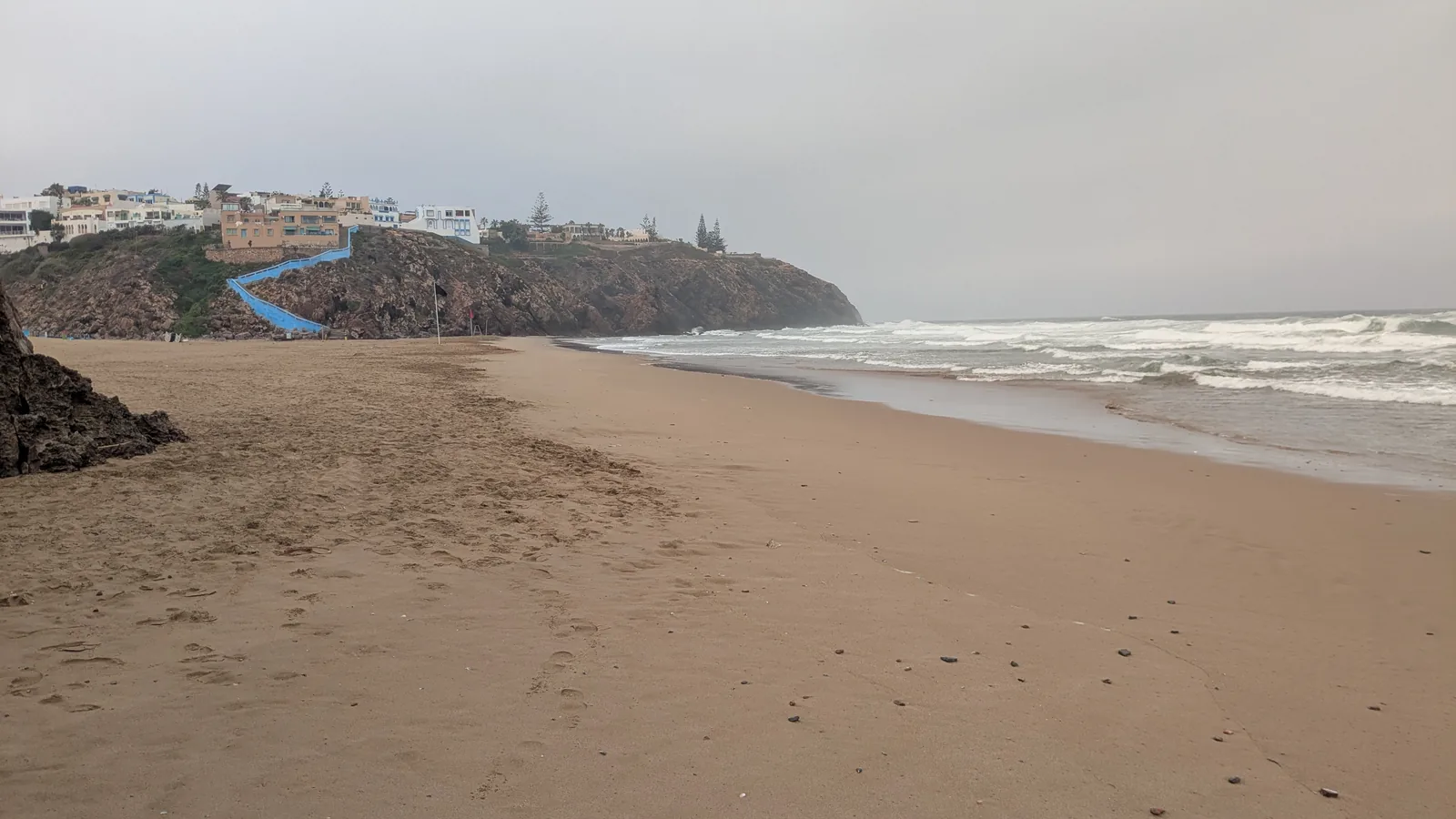
Wide sandy beach at Mirleft on Morocco’s Atlantic coast

Mirleft is only a short drive north of Sidi Ifni and has several attractive beaches.

We had already stayed in Mirleft before arriving in Sidi Ifni, so we mainly used its beaches during that part of the trip rather than travelling back from Sidi Ifni.

The main beach and the natural-arch beach near Mirleft are both worth visiting. Mirleft itself is pleasant and relaxed, although most of its appeal for us was the coastline rather than a long list of attractions in the town.

Markets and shopping in Sidi Ifni

Sidi Ifni is not a major shopping destination, but its markets were some of the most interesting places we visited.

The biggest event is the Sunday market on the former Spanish airfield. There is also a smaller daily market for fruit, vegetables and everyday goods.

Most of what is sold is practical rather than aimed at tourists, which is part of what makes it worth visiting.

The Sunday market

Fresh produce stalls at the Sunday market on Sidi Ifni’s former airfield

The Sunday market is one of the busiest places in Sidi Ifni.

It takes place across part of the former Spanish airfield and runs through most of the day. Traders begin setting up on Saturday, but Sunday is the main market day.

There are large sections selling clothing, tools, jewellery, household goods, toys, fruit, vegetables, dried fruit, nuts, honey and amlou.

Some clothing areas had fixed prices, often between 5 and 30 DH. Other stalls, especially the bric-a-brac and jewellery sellers, were more open to bargaining.

We bought football shirts, shorts, jewellery and food. Football shirts were around 30 DH, and we found shirts for Palestine and Côte d’Ivoire among the usual club and national-team designs.

Most of the market is aimed at local shoppers rather than visitors, but there were a couple of stalls selling attractive jewellery and locally produced honey and amlou.

The daily market

The smaller daily market is useful for fruit, vegetables and basic groceries.

Prices were generally reasonable, although they changed according to the product, quality and season. It was the sort of market where local people actually shopped rather than somewhere arranged for tourists.

We used it mainly for fresh food while staying in the town.

Fresh bread next to Post Office

There is also a very good outdoor bread section close to the Al Barid Bank and post office ATM.

It is a useful place to pick up fresh local bread, especially in the morning, and it is easy to combine with a cash withdrawal.

This was one of those practical places we only discovered by spending longer in the town, but it is worth knowing about if you are self-catering.

Jawahir Market Supermarket

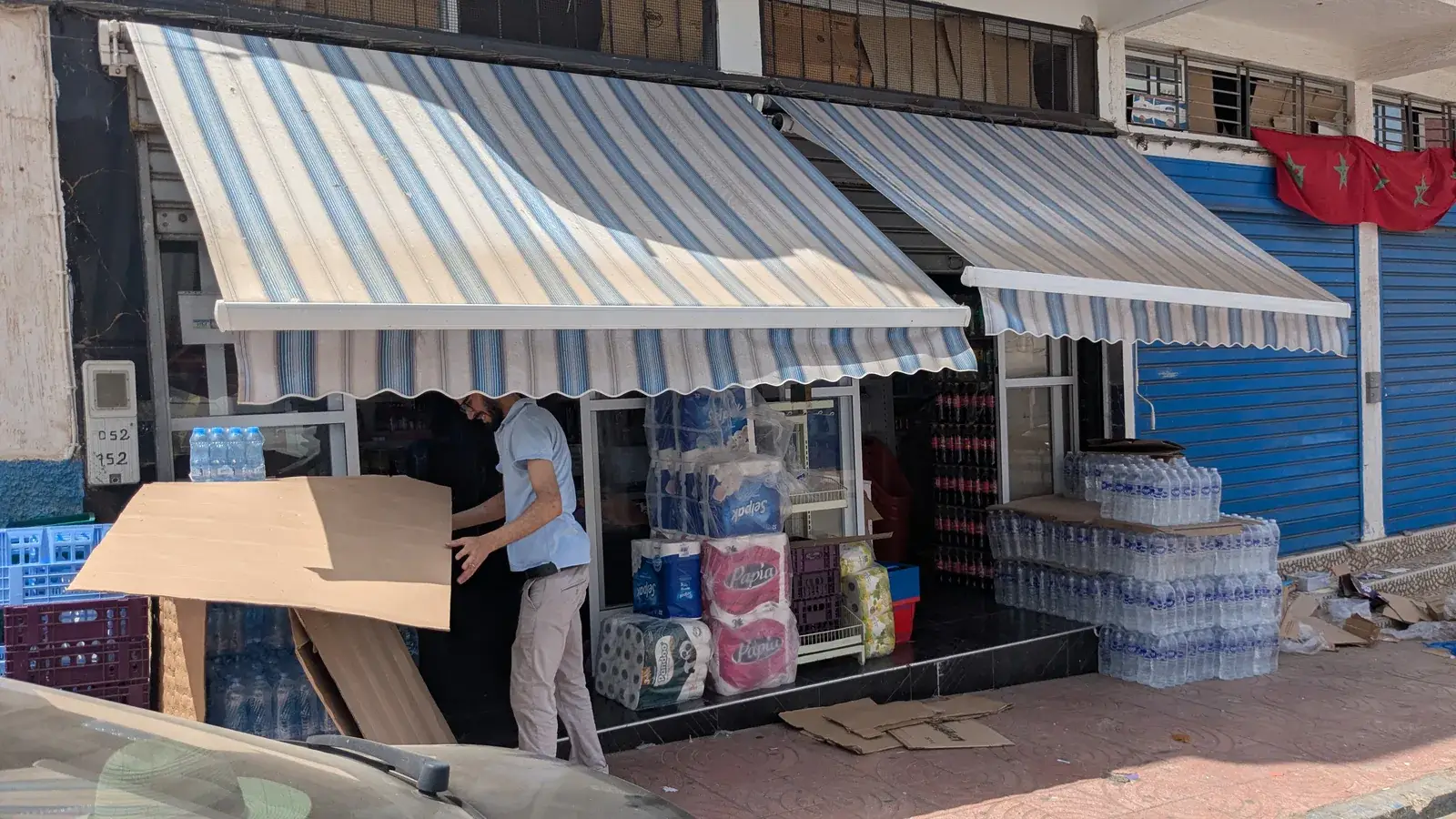
Exterior of Jawahir supermarket in Sidi Ifni

Jawahir Market was the best supermarket we found in Sidi Ifni.

It had a wider range of imported and packaged goods than most smaller shops, and the staff were friendly.

It also accepted cards, which was unusual. Most smaller shops, cafés and market stalls still expected cash.

Shopping tip: Carry cash for the market and smaller shops. Jawahir Market accepted cards, but most other places did not.

Many businesses also close or become very quiet between roughly 4 pm and 6 pm, so it is better to shop earlier in the day or later in the evening.

Food and drink in Sidi Ifni

We are vegetarian, and my wife generally prefers vegan food, so eating out in Sidi Ifni was not always straightforward.

There are plenty of cafés and fish restaurants, but the choice is more limited if you do not eat fish or meat. Because we were staying in a self-contained apartment, we cooked for ourselves quite a lot, the local fresh produce is excellent. You'll find a wide variety of fruit and vegetables (especially at the weekly market)

That said, we still found a few useful places for breakfast, pizza, tea and drinks.

Café Ocean Miramar

Café Ocean Miramar is beside the steps leading up towards the corniche and close to El Barco.

We had pizza there, which was perfectly fine. A margherita pizza cost 40 DH, which was about £3.20, €3.75 or $4.25 at the time of our visit.

We tried to order tagine at around 7.30 pm, but it was no longer available, and there was no pasta. That was a reminder that even when a menu looks broad, the actual choice can be much more limited later in the day.

Moroccan tea for two cost 15 DH, around £1.20, €1.40 or $1.60.

Breakfast cafés on the corniche

For breakfast, we used Café Tagout and Star House on the corniche.

Both were useful for a simple breakfast, tea or coffee with a sea view. They are well placed if you are walking along the corniche or heading towards the lighthouse and harbour viewpoints.

Bars and takeaway alcohol

There are two bars near the entrance to the beach where alcohol is available.

Both allowed takeaway purchases, and the prices were similar to what we had seen in shops around Agadir.

There was a strict 10 pm cutoff for takeaway alcohol, so do not leave it until later in the evening.

The bars were also good places to meet local people and had a much more relaxed atmosphere than I expected.

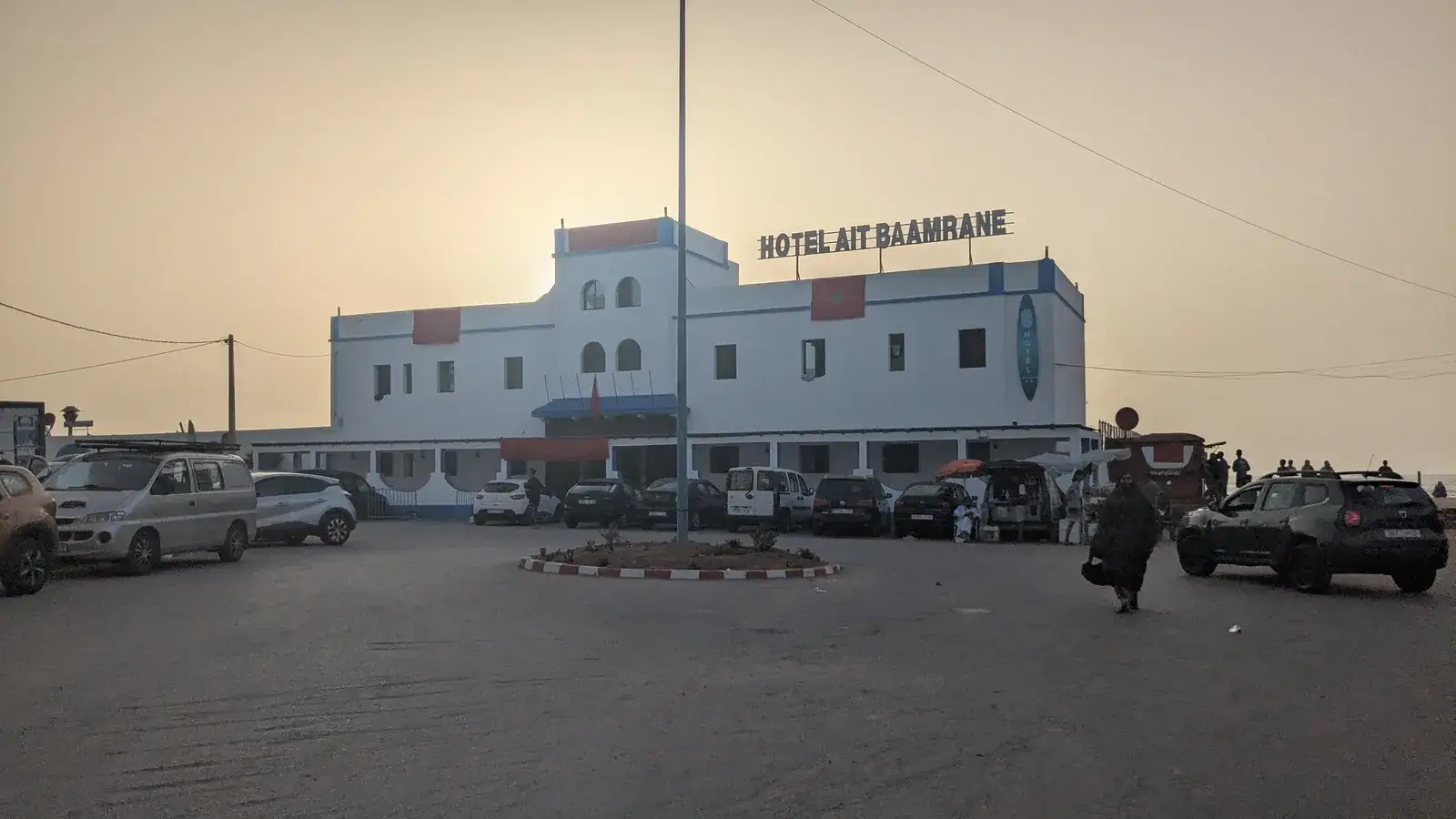
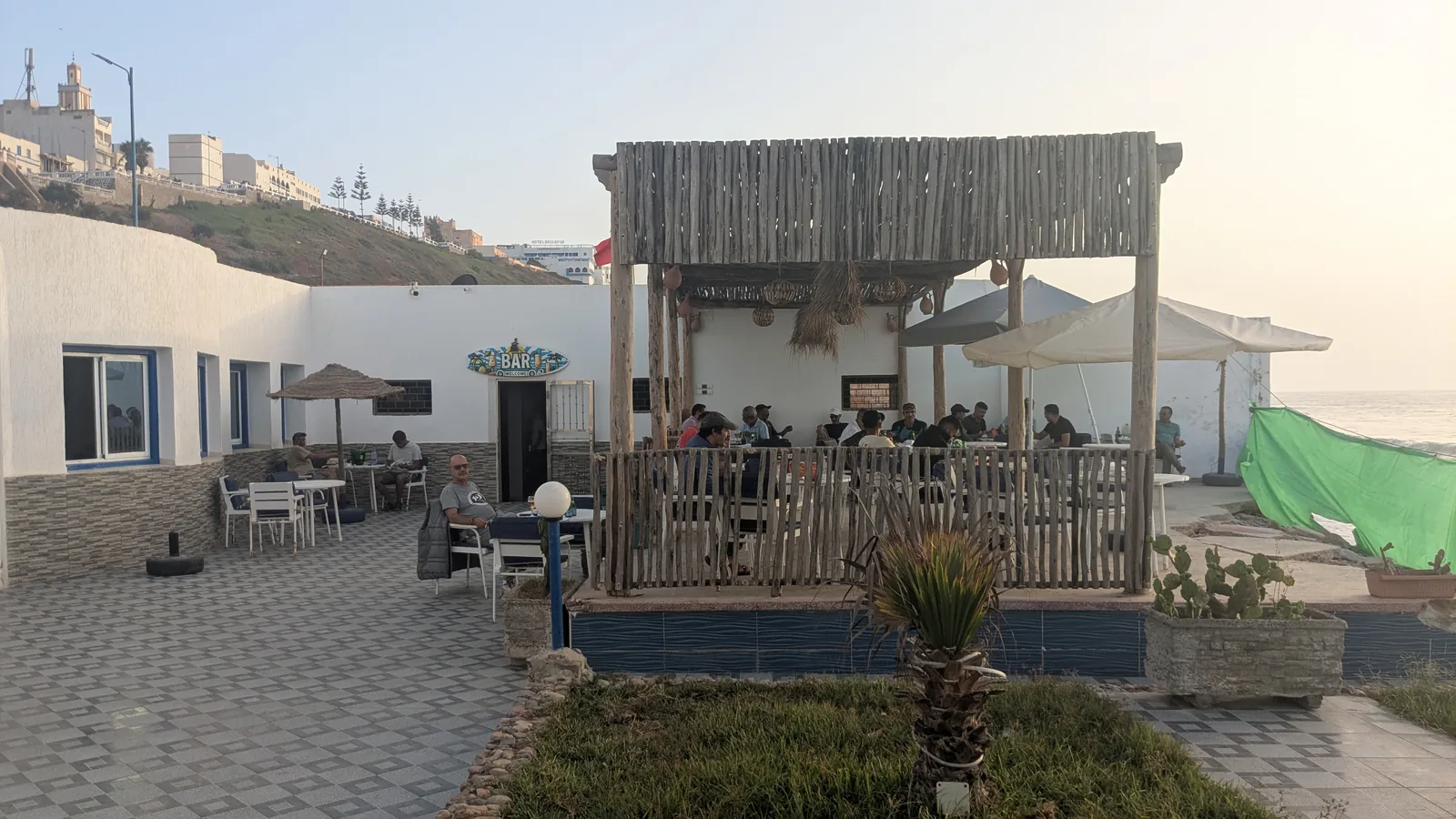
The bar at Hotel Aït Baamrane had the best sea view of the places we visited.

It is a good option for a drink overlooking the Atlantic, especially around sunset.  There is also a restaurant here. Very Friendly.


Exterior of Hotel Aït Baamrane near the Sidi Ifni seafront
Outdoor bar terrace at Hotel Aït Baamrane in Sidi Ifni

Afternoon closures and meal times

Sidi Ifni appears to retain something of the Spanish siesta tradition.

Many shops, cafés and services close or become very quiet from roughly 4 pm until 6 pm, then reopen later in the evening.

Do not assume somewhere will stay open continuously through the afternoon. It is better to shop, eat or run errands before 4 pm or wait until places begin reopening later.

Vegetarian tip: Do not rely on every restaurant having a suitable vegetarian meal available, even when the menu suggests one.

Self-catering made our stay much easier. Jawahir Market, the daily produce market and the fresh bread stalls near Al Barid Bank were particularly useful.  Weekly market had the best fruit and vegetables.

Our hammam experience in Sidi Ifni

We also tried a traditional hammam while staying in Sidi Ifni.

It was one of the more memorable experiences of the trip, although it was also much more intimate than some of us expected.

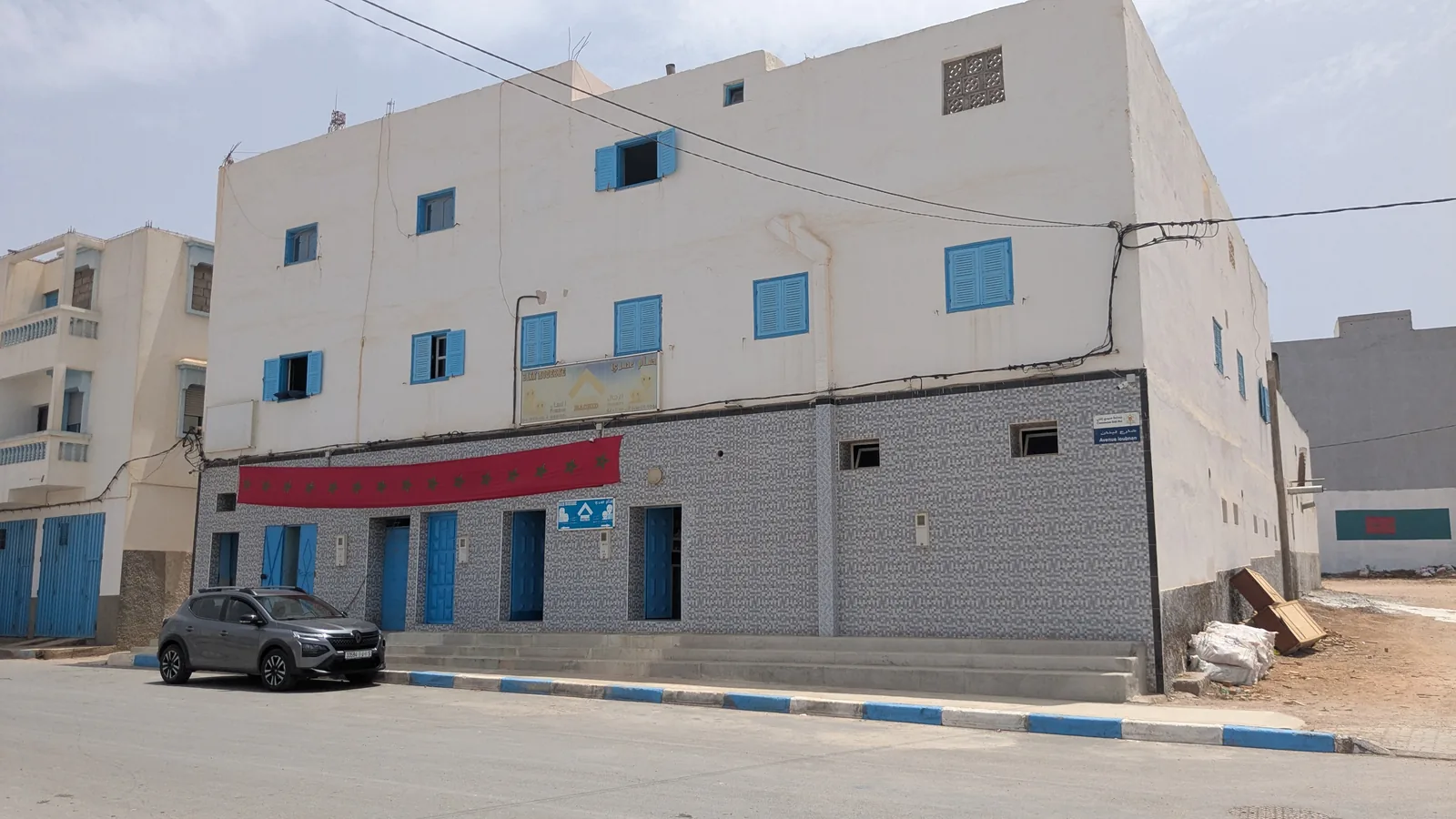
We went to Bain Moderne, which has separate men’s and women’s sides. Both sides were open during the day, and we went in the morning before around 1 pm.  Opening times list on the sign outside say its open daily 7am-11pm.

Exterior of the Bain Moderne public hammam in Sidi Ifni

What to bring

Bring your own towel and underwear because towels were not provided.

There were secure lockers for clothes and valuables, which made the process easier.

The men’s and women’s entrances are separate, and the two sides are clearly divided when you arrive.

We had not used a Moroccan hammam before, but people inside were helpful and showed us what to do.

For anyone wanting to recreate part of the experience at home, we sell a Moroccan hammam set with black soap and kessa scrubbing gloves, personally sourced in Morocco.

What is costs

For a family of five we paid a total of 505 DH, which was around £40.45, €47.35 or $53.85 at the time.

The price included all toiletries (savon noir, ghassoul and a new kessa glove), entry and  scrub/massage / treatment. This scrub and massage costs 50DH per person of the price but its the main event so don't miss it.

What the experience was like

On the men’s side, Omar the masseur helped direct me through the process, so it was fairly straightforward once I was inside.

The women had a good time but were surprised by how naked and physically close the whole experience was. The scrubbing is very direct and much more intimate than a spa treatment in the UK.

Our child also took part in the full experience.

Overall, it was good fun and definitely memorable, although some of us said they probably would not do it again.

Day trips from Sidi Ifni

Sidi Ifni is quiet enough to use as a base for a few easy day trips.

The best options for us were Sidi Oulezeg Beach and Guelmim. Mirleft and Legzira also work well, although we had already visited both before arriving in Sidi Ifni.

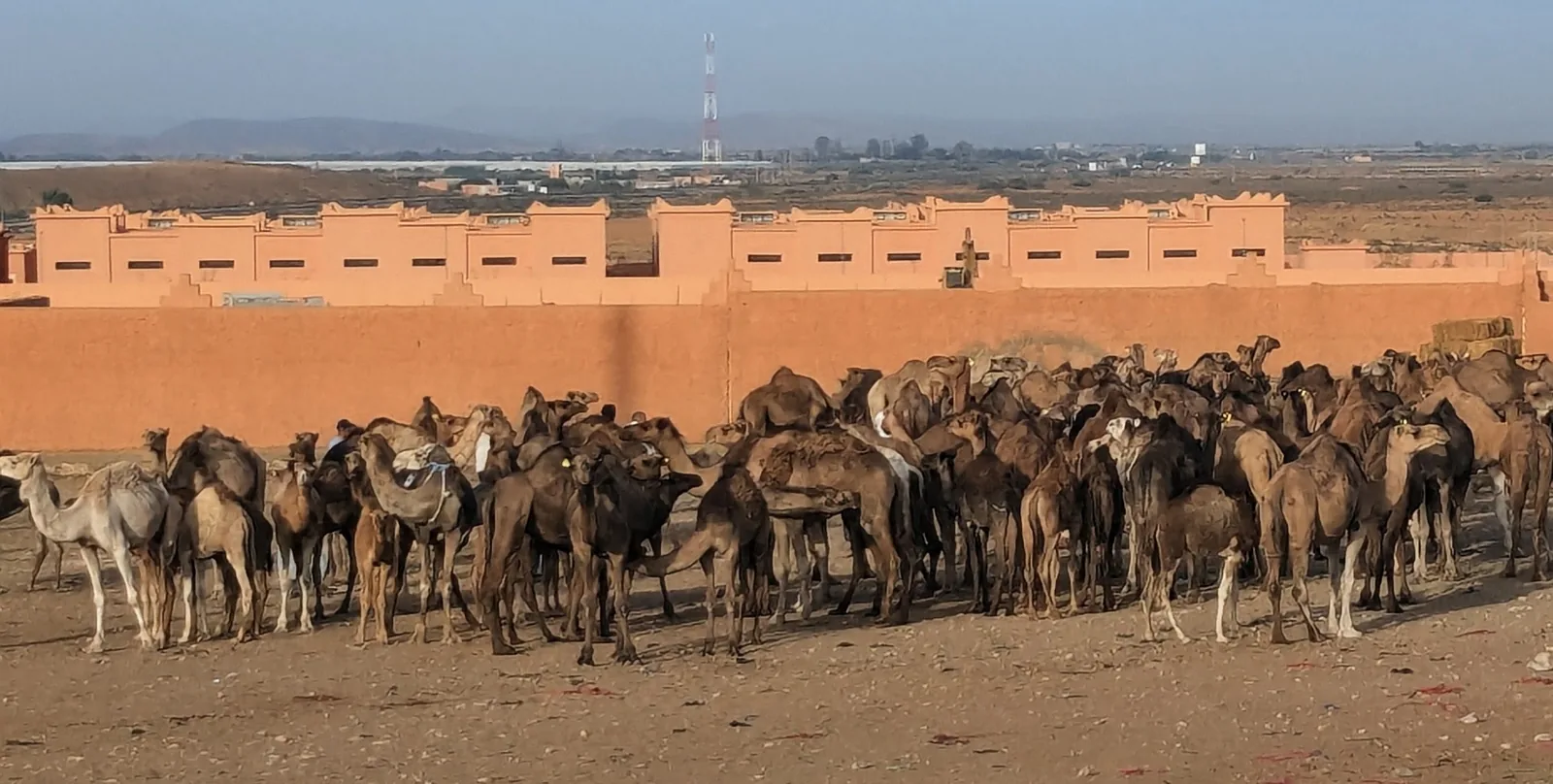
Guelmim Camel Market

Guelmim is around an hour from Sidi Ifni by car.

We left at about 6.30 am and arrived at around 7.25 am. We could probably have left slightly later, but going early meant avoiding the worst of the heat.

The market was mainly aimed at local shoppers and included fruit, vegetables and animals. We bought food there and also visited Marjane for a larger supermarket shop.

Guelmim is useful rather than beautiful, but it makes a good half-day trip if you want a larger market and more shopping options.

Large group of camels gathered at the livestock market in Guelmim

Mirleft and Legzira

Mirleft is a short drive north of Sidi Ifni and is worth visiting for its beaches and relaxed atmosphere.

Legzira Beach lies between Mirleft and Sidi Ifni and is best known for its natural rock arch.

Both are easy to combine with the journey to or from Sidi Ifni rather than making a separate day trip.

Sidi Oulezeg

For us, the best day trip was Sidi Oulezeg Beach.

It is close enough to visit for a few hours, but cleaner, quieter and better for swimming than the main beach in Sidi Ifni.

I have included the full access and beach information earlier in this guide.

Getting to Sidi Ifni and getting around

We arrived in Sidi Ifni by hire car after staying in Mirleft.

Agadir is roughly two and a half hours away by car or taxi, while Guelmim is around an hour away.

A car is not essential once you are in Sidi Ifni because the town centre, corniche, beach and historic buildings are all within walking distance.

It is useful, however, for reaching Sidi Oulezeg, Guelmim, Mirleft and other places along the coast.

Driving and parking

Parking was easy and generally free during our stay.

The road south of Sidi Ifni had some potholes, but we managed it without any major difficulty.

We also drove towards Guelmim before sunrise and had no problems. Police checkpoints were normal and did not cause us any concern.

I would still avoid unnecessary night driving on unfamiliar rural roads because visibility can be poor and road conditions change quickly.

CTM buses and parcels

Sidi Ifni has a CTM office for buses and CTM Messagerie parcels.

This is useful both for travelling and for receiving boxes sent from other Moroccan cities. There's also a central post office with the Al Barid ATM.

Walking around town

Sidi Ifni is compact and easy to explore on foot, but it is hillier than it first appears.

The main centre sits above the beach, so most routes involve a steep climb or descent.

This can make the town difficult for visitors with limited mobility, especially between the beach and corniche.

Where we stayed in Sidi Ifni

Casa Hollanda

We stayed at Casa Hollanda on Rue de la Plage.

It was a three-bedroom apartment with a kitchen, hot water and good Wi-Fi. The host was attentive and it worked well for our family group.

The property is spread over three floors, which helped keep it cooler, although there are obviously quite a lot of stairs.

It is centrally located above the beach, so cafés, shops, the historic centre and the corniche are all within walking distance.

More practical Morocco travel information

I have already written a separate guide covering practical Morocco travel information, including money, mobile data, language and other useful basics.

Rather than repeating all of that here, you can read the full practical guide below.

Final thoughts on Sidi Ifni

Sidi Ifni is not a polished resort, and that is part of its appeal.

The main beach was littered, restaurant choice was limited for vegetarians and the town became very quiet during parts of the afternoon.

On the other hand, it had fascinating Spanish-period architecture, friendly people, almost no international tourists and a much more relaxed atmosphere than Morocco’s better-known destinations.

The historic buildings, Sunday market, corniche and nearby Sidi Oulezeg Beach made it one of the most unusual places on our trip.

I would recommend it most strongly to history lovers, photographers, surfers, families and slow travellers rather than anyone looking for nightlife or a polished beach resort.

Have you visited Sidi Ifni? Leave a comment below with your own recommendations, corrections or questions.